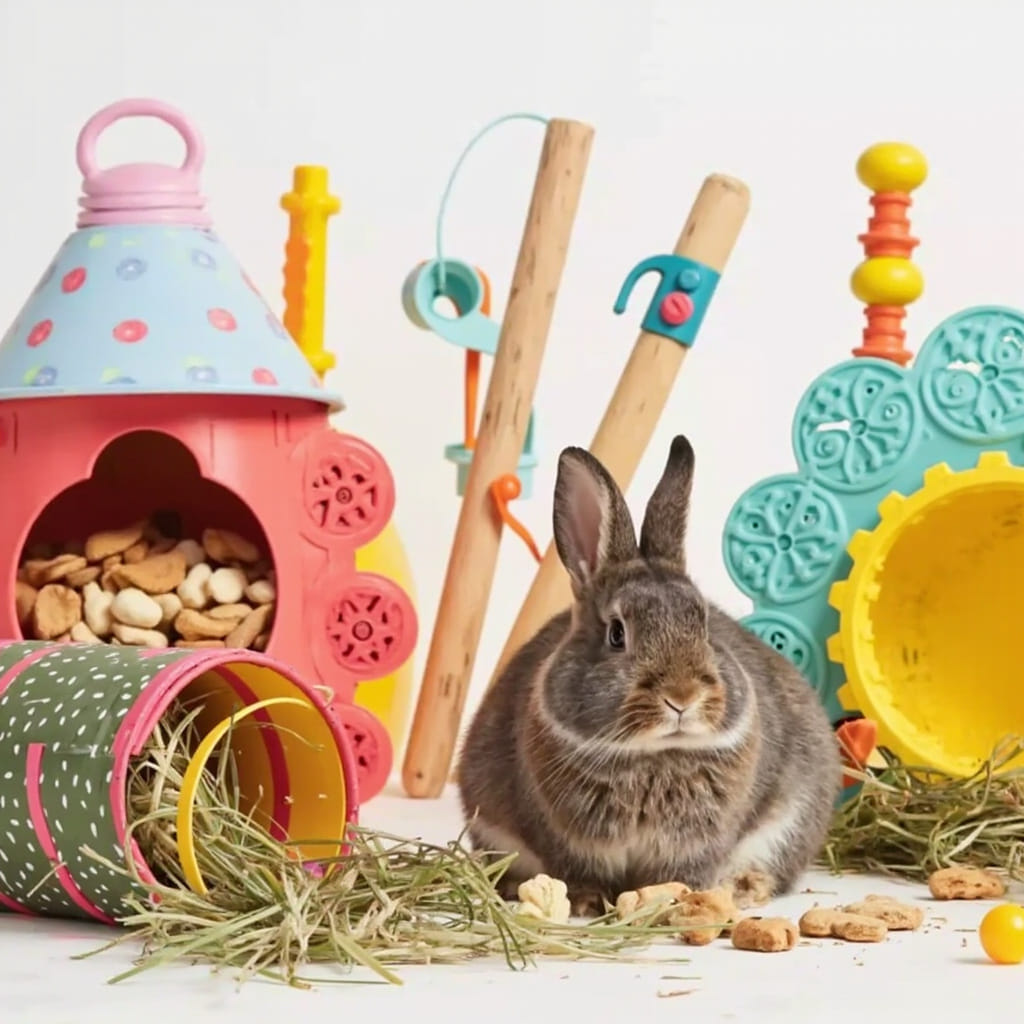
Toys matter more than most rabbit owners realize. A bored rabbit is not just an unhappy rabbit — they can develop destructive habits, stress-related health problems, and behavioral issues. The right toys keep your rabbit mentally sharp, physically active, and emotionally content.
Unlike dogs who retrieve or cats who chase, rabbits have different play instincts. They love to chew, dig, toss, and explore. The best rabbit toys tap into these natural behaviors while also providing health benefits.
Why Toys Are Essential
Rabbit teeth grow continuously throughout their life. Without proper chewing outlets, teeth can overgrow and cause serious dental problems. Toys provide the constant chewing rabbits need to wear their teeth down naturally.
Mental stimulation is equally important. Rabbits are intelligent animals who need activity to prevent boredom. A rabbit with nothing to do may resort to chewing furniture, digging at carpets, or other problem behaviors. The right toys redirect this energy into positive outlets.
Chew Toys
Chew toys are the backbone of any rabbit toy collection. Look for natural wood options like apple branches, willow sticks, and unpainted birch or maple. Avoid soft woods like pine or cedar, as these can contain harmful oils.
Untreated wicker toys are excellent choices. You can find woven willow balls, rings, and tunnels specifically made for rabbits. Cardboard is another readily available option — toilet paper rolls stuffed with hay make simple but engaging toys. Just avoid any cardboard with glue, ink, or glossy coatings.
Apple wood and pear wood sticks are widely available and rabbits typically love them. These hard woods provide satisfying chewing resistance and last longer than softer options.
Tunnel and Hideaway Toys
Rabbits love to explore and hide. Tunnel systems mimic the burrows rabbits would create in the wild. You can find fabric tunnels, cardboard tunnel systems, and even collapsable tunnels made specifically for rabbits.
Hideaway houses give rabbits a sense of security. Look for wooden houses, willow hideaways, or fabric pop-tents designed for small animals. Having a safe space to retreat reduces stress and gives your rabbit confidence in their environment.
Puzzle Feeders and Foraging Toys
Rabbits are foragers by nature. Puzzle feeders make mealtime more engaging by requiring your rabbit to work for their food. You can hide treats inside rolling balls, puzzle boxes, or foraging toys that require pushing, pawing, or nibbling to release the treat.
Simple foraging toys can be made at home. Stuff a toilet paper roll with hay and a few treats, then fold the ends closed. Your rabbit has to work to get to the hay inside. This mimics natural grazing behavior and provides mental stimulation.
Toss and Roll Toys
Some rabbits enjoy toys they can push and toss. Wooden balls, plastic balls with bells inside, and lightweight baby toys make good options. Watch carefully if you offer plastic — if your rabbit tends to chew and swallow pieces, stick with natural materials.
Willow balls are particularly popular. Rabbits enjoy pushing them around, throwing them, and even carrying them. These lightweight toys provide both physical activity and entertainment.
Dig Toys
If your rabbit loves to dig, provide appropriate outlets. A digging box filled with shredded paper, hay, or safe digging substrate gives them a place to satisfy this urge without destroying your floors or furniture.
Some rabbits enjoy digging into folded towels or blankets. You can create dig-friendly spaces by folding towels and hiding treats inside for your rabbit to discover.
What to Avoid
Not all toys are safe for rabbits. Avoid anything with small detachable parts that could be swallowed. Steer clear of plastic that crumbles easily, rubber bands, string, and anything with sharp edges.
Exercise balls and hamster wheels are not appropriate for rabbits. Rabbits spines do not flex the same way as small rodents, and these devices can cause serious injury. Also avoid felt or synthetic fabrics that could cause digestive blockages if ingested.
Rotating Toys for Interest
Rabbits, like humans, can get bored with the same toys. Rotating their toy selection every week or two keeps things fresh and engaging. Store some toys away and swap them out periodically so your rabbit feels like they are getting new items.
Keep an eye on worn or damaged toys and replace them. Anything that could splinter, break into small pieces, or unravel should be removed promptly.
Conclusion
The best toy for your rabbit is one that matches their individual personality and instincts. Some rabbits love to chew everything, while others prefer tunneling and hiding. Watch what your rabbit gravitates toward and build their toy collection around those preferences.
A well-toyed rabbit is a happy, healthy rabbit. Rotate varieties, ensure plenty of chewing options, and most importantly — join in the play. Many rabbits enjoy interactive play with their owners, whether it is chasing a tossed ball or exploring a new tunnel together.