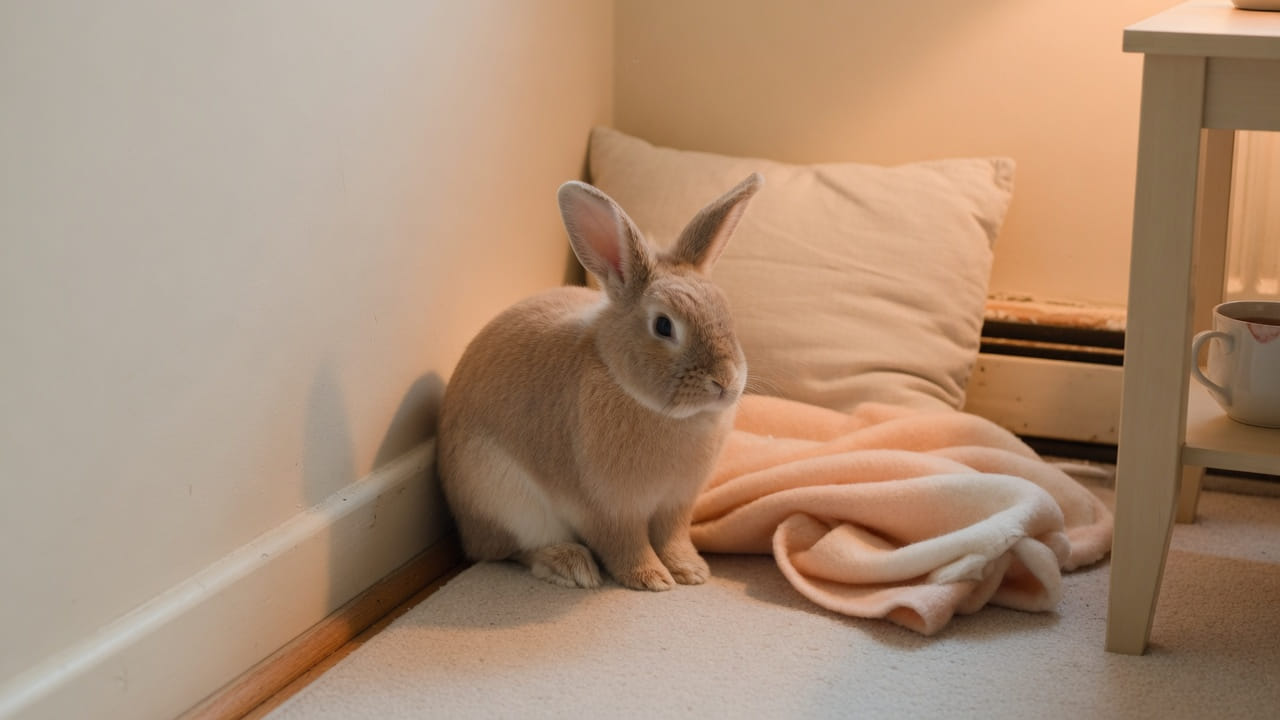
Rabbits evolved to hide weakness. In the wild, a sick rabbit is a target. This survival instinct is still strong in domestic rabbits — which means by the time your rabbit shows obvious signs of illness, the problem is usually serious.
This is why rabbit veterinarians stress the importance of knowing what is normal for your specific rabbit. Know their routine, their personality, their favorite positions, and their daily patterns. Deviation from normal is often the first — and sometimes only — sign that something is wrong.
The Bottom Line Up Front
Any of these warrant an immediate call to your vet:
- Not eating for 12 hours or more
- No poop production for 24 hours
- Lethargy lasting more than a few hours
- Head tilt or circling
- Labored breathing or wheezing
- Diarrhea or very soft cecotropes
- Blood anywhere it should not be
Daily Normal: What a Healthy Rabbit Looks Like
Before you can spot the abnormal, you need to know what healthy looks like for your rabbit:
- Eating: Eats hay throughout the day, not just at mealtimes
- Pooping: Produces round, uniform poops every few hours — hundreds per day
- Drinking: Drinks water regularly, especially after eating
- Moving: Takes several hops per minute even when resting
- Grooming: Cleans itself regularly, fur stays clean
- Alert: Ears forward when curious, relaxed when resting
- Interacting: Curious about their surroundings, responds to your voice
Subtle Signs of Illness
1. Changed Eating Patterns
The most important sign to watch. Rabbits should eat constantly. A rabbit who walks past their hay without interest, ignores pellets, or refuses a treat they normally love is telling you something is wrong.
What to do: Try offering their favorite green. If they refuse it, call your vet within 4 to 6 hours. If they refuse water too, this is an emergency.
2. Fewer or Different Poops
Healthy rabbits produce hundreds of poop pellets daily. If the pile looks smaller, the pellets are smaller than usual, or they are misshapen — something is off.
What to do: Count pellets for a day if you can. A drop of more than 50% is worth calling your vet about.
3. Sitting in One Position for Hours
Rabbits do nap — but they do not sleep for hours at a time like dogs. If your rabbit is in the same position, in the same spot, for more than a few hours, something is wrong.
What to do: Gently offer a treat and see if they respond. If they do not move or show interest, call your vet.
4. Hunched Posture
A rabbit who looks "balled up" with their belly tucked tight, not stretching out, not lying on their side — this posture usually means pain or GI discomfort.
What to do: This is often a precursor to GI stasis. Learn about GI stasis here →
5. Grinding Teeth (Loud Purring)
Soft tooth grinding — like a cat purring — is contentment. Loud, rhythmic tooth grinding means pain. You will hear it from across the room.
What to do: Loud grinding is a vet visit, same day if possible.
6. Drooling or Wet Chin
A wet chin, neck, or dewlap (the fold under the chin) is a sign of dental problems or oral pain. By the time you see drooling, the dental issue has usually been developing for a while.
What to do: Check their mouth gently — are the teeth overgrown? Can you see any sores? Call your vet within 24 hours.
7. Head Tilt or Circling
A head that is slightly tilted, or a rabbit who walks in circles instead of straight lines, is a neurological issue. This can come on very suddenly.
What to do: This is an emergency. Call your vet immediately or go to an emergency vet.
8. Labored Breathing or Gasping
A rabbit's breathing should be calm and barely audible. If you can hear them breathing from across the room, if their sides are heaving, or if they are gasping — this is an emergency.
What to do: Go to the emergency vet now. Respiratory distress can become fatal very quickly.
9. Runny Eyes or Nose
Discharge from the eyes or nose — especially if thick, yellow, or crusty — is a sign of infection or dental disease spreading to the sinuses.
What to do: Document the discharge and call your vet within 24 hours. If breathing is affected too, treat as emergency.
10. Flopping or Falling Over Repeatedly
Rabbits flop onto their sides when happy and relaxed — that is normal. But a rabbit who loses their balance, stumbles, or falls over repeatedly is showing neurological or inner ear problems.
What to do: Call your vet today.
11. Changes in Grooming
A rabbit who suddenly stops grooming, resulting in a dull or matted coat, is usually feeling unwell. The reverse — over-grooming one spot until a bald patch forms — also warrants attention.
What to do: Check for other signs. If the coat change is sudden or accompanied by other symptoms, call your vet.
12. Grunting or Lunging Without Reason
Rabbits who suddenly become aggressive — grunting, lunging, or biting when they normally do not — are usually in pain or frightened. Pain-related aggression is common in rabbits with dental disease, GI issues, or arthritis.
What to do: Consider this a symptom, not a behavior problem. Schedule a vet visit.
What to Do When You Think Your Rabbit Is Sick
- Call your vet. Describe what you are seeing. Do not wait to see if it gets worse.
- Keep your rabbit warm. Sick rabbits lose body heat quickly. Provide a heating pad on low or warm towels.
- Encourage eating. Offer hay, pellets, and favorite greens. If they refuse, you can syringe-feed critical care.
- Monitor poop. Take a photo of their poop each hour so your vet can see changes.
- Do not delay. In rabbits, what seems minor can become critical within hours. When in doubt, call the vet.
The Emergency Vet Checklist
Before an emergency happens, have this ready:
- Your vet's number: Regular and after-hours
- Emergency vet clinic: Find one before you need it — see our emergency vet list →
- Critical care powder: Keep a backup supply at home
- Small carrier: Easy to access, already set up with familiar bedding
- Heat pack: For the car ride
Final Thought
Trust your gut. You know your rabbit better than anyone. If something feels off — even if you cannot pinpoint what — call your vet. A quick phone call is almost always free, and rabbits are best treated early, not late.
GI Stasis: The Emergency Every Rabbit Owner Needs to Know About →