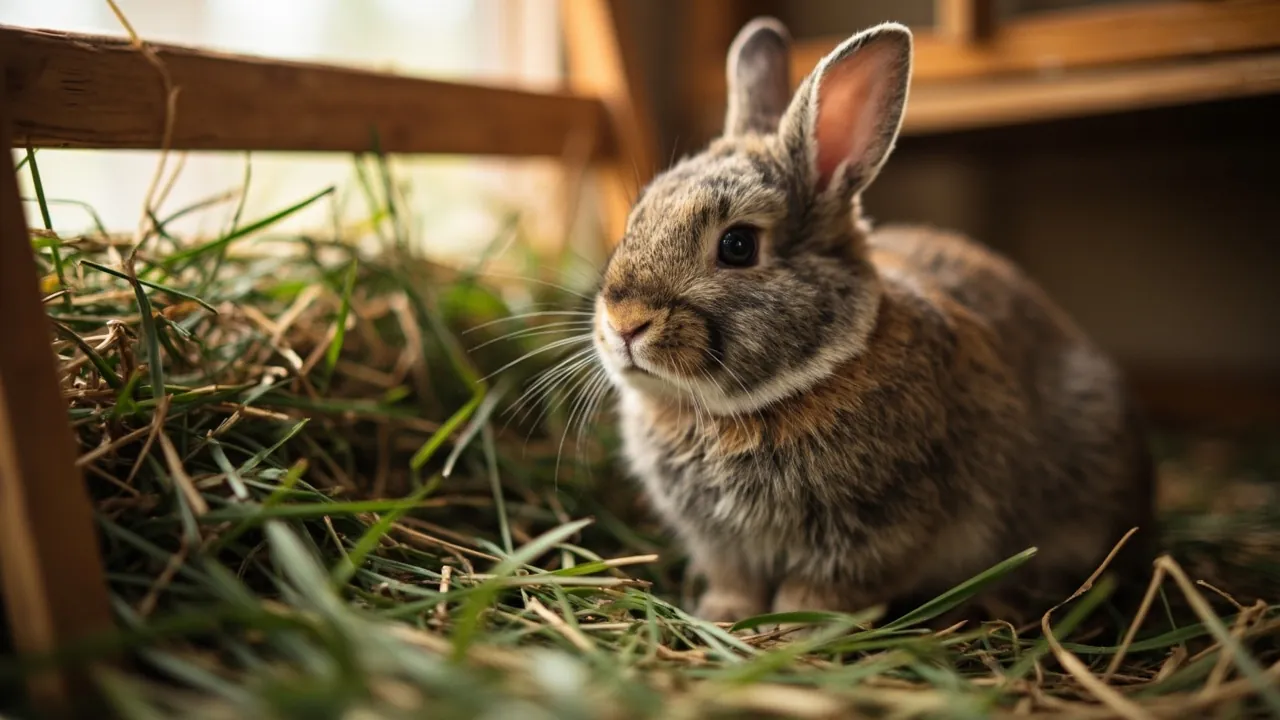
If you take one thing away from this entire website, let it be this: hay is everything. Not some of their diet. Not a supplement. Everything. And not all hay is created equal.
The right hay keeps a rabbit’s digestive system moving, wears down their constantly growing teeth, provides mental stimulation, and directly prevents the number one killer of pet rabbits: GI stasis.
This guide breaks down every hay type, what it is best for, and exactly which brands to buy — so you never accidentally feed your rabbit something subpar.
⚠️ Medical information: This article is for general educational purposes and is not a substitute for professional veterinary care. Always consult a rabbit-savvy veterinarian for health concerns. See our full disclaimer.
Quick Answer: Timothy hay is the best hay for most adult rabbits, providing the ideal fiber-to-protein balance for healthy digestion and dental wear. Orchard grass and meadow hay are excellent alternatives or mix-ins, especially for picky eaters. Offer unlimited hay daily — it should make up at least 80% of your rabbit's diet.
Types of Hay for Rabbits — Full Breakdown
- 1. Types of Hay
- 2. Hay Comparison Chart
- 3. Brand Recommendations
- 4. How to Check Hay Quality
- 5. Storage Tips
- 6. Should You Mix Hays?
Not all hay is appropriate for daily feeding. Some are too rich, others too coarse. Here is what you need to know about each type.
Timothy Hay
The gold standard for adult rabbits. Timothy hay is a perennial grass with a ideal fiber-to-protein ratio for adult rabbits. It has coarse stems, soft seed heads, and broad blades that wear teeth evenly.
Timothy is available in three cuttings:
- First cut: More stems, higher fiber, coarser texture. Best for rabbits who need to lose weight or as a universal staple.
- Second cut: The most popular choice — balanced stem and leaf, perfect texture for most rabbits. This is what most people mean when they say “timothy hay.”
- Third cut: Softer, more leaf, less stem. Good for picky eaters, senior rabbits, or rabbits recovering from dental issues. May be too soft for heavy chewing.
Orchard Grass
A soft, pliable grass hay with a sweeter smell than timothy. Excellent for daily feeding and often preferred by rabbits who turn their noses up at timothy. It is not a true “grass” in the botanical sense but is safe and nutritious.
Orchard grass grows in clumps and has broader leaves than timothy. Many owners use it as a primary hay or mix it 50/50 with timothy for variety.
Best for: Rabbits who refuse timothy, rabbits who need a softer hay, daily mixing hay.
Meadow Hay
Meadow hay is a mix of various grasses and wildflowers from a field. The exact composition varies by batch and supplier, which makes it less consistent than single-species hays.
Quality meadow hay can be excellent — rich in variety and more interesting for rabbits. Poor quality meadow hay can include coarse weeds, dusty material, or unwanted plants.
Best for: Rabbits who eat a very narrow variety, owners who want to replicate a more natural diet.
Oat Hay
Oat hay comes from oat plants harvested after the grain is removed. It has a distinctive golden color, hollow stems, and a slightly different nutritional profile than grass hays.
It is higher in fiber and lower in protein than timothy, making it excellent for rabbits prone to obesity or those who need extra gut motility support.
Important: Do not confuse oat hay with straw. Straw is the leftover stalks after grain harvest and has almost no nutritional value.
Best for: Overweight rabbits, rabbits needing extra fiber, adding variety to a timothy-based diet.
Alfalfa Hay
Alfalfa is a legume, not a grass. It is dramatically higher in calcium, protein, and calories than grass hays. This makes it excellent for young growing rabbits (under 6 months) and pregnant or nursing does — but dangerous for healthy adults.
Adult rabbits fed unlimited alfalfa will gain weight, develop urinary sludge from excess calcium, and may refuse grass hays once they acquire a taste for the sweeter legume.
Think of alfalfa as a treat, not a staple. A handful occasionally is fine for most adult rabbits, but it should not be offered free-choice.
Best for: Baby rabbits (up to 6 months), pregnant or nursing rabbits, senior rabbits underweight.
Botanical Hay
Botanical hays are timothy or other grass hays blended with dried herbs, flowers, or leafier plants. Brands like Oxbow’s “Botanical Hay” add chamomile, lavender, clover, and other safe plants.
These are enrichment hays — they encourage picky eaters to forage and add variety. They do not replace a primary grass hay but are excellent as a supplement or mix-in.
Best for: Picky eaters, enrichment, adding variety to a monotonous diet.
Hay Comparison Chart
Hay Type Protein Fiber Best For Daily Feeding?
Timothy (2nd cut) 7–8% 32–36% Adult rabbits, daily staple Yes — unlimited
Orchard Grass 7–10% 30–35% Picky eaters, daily staple, mixing Yes — unlimited
Meadow Hay Varies Varies Variety, foraging enrichment Yes — as part of mix
Oat Hay 5–7% 30–35% Overweight rabbits, extra fiber Yes — unlimited
Alfalfa 15–18% 25–30% Babies, pregnant/nursing does No — treat only
Botanical Varies Varies Enrichment, picky eaters Yes — as mix-in
Brand Recommendations
Not all hay is created equal, and brand matters. Here are the brands I trust and have seen consistently deliver quality.
Small Pet Select
Best overall choice. Small Pet Select specializes exclusively in small animal hay. Their timothy hay is hand-selected, vacuum-packed to preserve freshness, and consistently green and fragrant. They offer first, second, and third cut timothy, orchard grass, and meadow hay.
The packaging is excellent — the hay arrives in a sealed bag inside a cardboard box, which protects it during shipping. They also sell sample bags so you can try different cuts before committing to a large quantity.
What to buy: Timothy Hay 2nd Cut on Amazon — your everyday staple.
Also try: Orchard Grass Hay on Amazon — excellent for mixing or as a primary for picky eaters.
Oxbow
The most widely available premium brand. Oxbow’s hays are consistently good quality and found in most pet stores. Their timothy hay is a reliable staple — green, fragrant, and appropriately coarse.
Oxbow also offers “Simple Gratify” Botanical Hay, Western Timothy Hay with added herbs, and Orchard Grass. Their packaging has improved over the years but can still arrive more compressed than ideal.
What to buy: Western Timothy Hay on Amazon — your everyday staple.
Also try: Orchard Grass Hay on Amazon — excellent alternative or mixer.
KMS Hayloft
A smaller, farm-based supplier known for exceptional quality. KMS Hayloft grows and packages their own hay on a family farm. Their timothy is long-stem, fresh, and less compressed than bagged brands.
Because KMS is smaller, quality is highly seasonal — some cuttings are noticeably better than others. But when you get a good batch, it is among the best available.
What to buy: Timothy Hay — bulk quantities for serious hay feeders.
Note: Buy directly from their website for the freshest product.
Farmer Dave’s
A consistent performer at a reasonable price. Farmer Dave’s offers timothy, orchard, meadow, and oat hay. Their hay is clean, fragrant, and less dusty than many competitors at the same price point.
Available in both small bags and bulk quantities. Better packaging than most pet store brands but still more compressed than Small Pet Select.
What to buy: Timothy Orchard Blend — a ready-made mix of two excellent hays.
Also try: Oat Hay — excellent for variety and adding texture to a diet.
What to Avoid
- Kaytee — Often dusty, inconsistent quality, frequently recalled for mold.
- Generic pet store brands — No quality guarantee, often old stock that has lost nutritional value.
- Hay with visible mold, mustiness, or wet spots — Never feed this to your rabbit.
- Hay that is entirely golden/straw-colored with no green — Too old, deficient in nutrients.
How to Check Hay Quality
Before feeding any new bag of hay, inspect it. A quick quality check takes 30 seconds and can prevent digestive upset.
Color
Good hay is green — ranging from bright spring green to a deeper forest green depending on the type and cutting. Some golden coloration is normal for oat hay or sun-bleached outer portions, but the majority should be green.
Red flags: Entirely yellow, tan, or brown hay that crumbles easily. Grayish hay that feels damp. Hay with dark spots or visible mold.
Smell
Fresh hay smells grassy and slightly sweet — like a summer meadow. It should be aromatic when you open the bag.
Red flags: Musty, dusty, or moldy smell. Smells like wet hay or compost. No smell at all (too old).
Texture
Hay should feel slightly rough anddry to the touch. Stems should be sturdy but not sharp. Leaves should be present and intact, not all crumbled to dust.
Red flags: Soggy or damp texture. Entirely soft and crumbly (too old or stored poorly). Excessive dust that rises when you open the bag.
Moisture
Hay should be dry throughout. Moisture leads to mold, which produces mycotoxins dangerous to rabbits.
How to check: Squeeze a handful firmly. Good hay springs back. Hay that stays compressed or feels damp has too much moisture.
Mold
Visible mold — white, green, blue, or black fuzzy spots — is an immediate discard. Even if only part of the bag is affected, discard the entire bag. Mold spores can spread throughout.
Storage Tips
Hay degrades quickly once the bag is open. Proper storage keeps it fresh, palatable, and safe for weeks.
Breathable Bags
Store hay in its original bag or a paper bag. Do not use plastic bags — they trap moisture and cause mold. Burlap sacks or cardboard boxes with ventilation holes also work well.
Cool and Dry
Heat and humidity are hay’s enemy. Store in a climate-controlled space — a closet, pantry, or air-conditioned room. Never store hay in a garage, shed, or basement where temperature and humidity fluctuate.
Avoid Plastic Containers
Glass or plastic airtight containers seem logical but actually trap residual moisture, creating a mold risk. If you must use a container, leave the lid cracked or use one with ventilation holes.
Use Within 2–3 Weeks
Once opened, use the bag within 2–3 weeks for peak freshness. The longer it sits, the more dust, flavor, and nutritional value it loses. Buy in quantities your rabbit can realistically consume.
Keep Off the Floor
Store hay on a shelf or in a bin off the floor. Floors — especially concrete — transfer cold and moisture, increasing the chance of mold.
Refrigerator Storage for Small Quantities
For rabbits who are ill or extremely picky, you can store a week’s supply of hay in the refrigerator in a paper bag. The cold dampness actually keeps it fresher longer for these cases. Bring to room temperature before offering.
Should You Mix Hays?
Yes — mixing hays is one of the best things you can do for your rabbit’s health and enrichment.
Benefits of Mixing
- Prevents boredom: Variety stimulates natural foraging behavior. A rabbit who gets the same single hay every day may eat less than one with options.
- Ensures adequate intake: If your rabbit refuses one type, another may still get eaten. This is especially valuable for picky eaters.
- Balances nutrition: Different hays have slightly different nutrient profiles. A mix provides a more balanced overall intake.
- More complete tooth wear: Hays with different stem thicknesses and textures wear teeth more evenly.
Recommended Mixing Ratios
There is no single correct ratio, but here are proven starting points:
- 50/50 Timothy and Orchard: The most popular mix. Equal parts of the two best daily hays.
- 60% Timothy / 20% Orchard / 20% Oat: A three-hay mix with variety and extra fiber.
- 70% Timothy / 30% Botanical: For rabbits who need encouragement to eat more hay.
- 40% Timothy / 40% Orchard / 20% Meadow: A natural-field inspired mix.
How to Offer a Mix
Do not pre-mix in the bag — this can lead to one type being selectively eaten while the other is ignored. Instead, offer separate piles or refill each type independently. This lets you monitor which hay your rabbit prefers and adjust accordingly.
A rabbit who eats 80% of their hay daily is getting adequate fiber. A rabbit who eats only 30% despite unlimited access may need a different mix, more variety, or a veterinary check.
The Bottom Line
Timothy hay or orchard grass should be your rabbit’s primary food — unlimited, always available, fresh daily. Mix in other grass hays for variety. Keep alfalfa as an occasional treat, not a staple. Buy from a reputable brand, check quality before feeding, and store properly. Your rabbit’s health depends on it.
Download Our Free Hay Guide
Print our Rabbit Supply Shopping List to make sure you always have the right hay on hand — plus everything else your rabbit needs.
Download List Browse All
When to Seek Professional Help
While home care can manage many situations, some circumstances require immediate professional veterinary attention. Understanding the difference between what you can handle yourself and what needs a veterinarian is one of the most important skills a rabbit owner can develop.
Contact a rabbit-savvy veterinarian immediately if:
- Your rabbit has stopped eating or drinking entirely
- You notice difficulty breathing or persistent wheezing
- There is visible injury, bleeding, or open wounds
- Your rabbit is unresponsive, severely lethargic, or unable to stand
- You suspect poisoning from a toxic plant or substance
- There has been no fecal output for more than 12 hours
Keep your veterinarian’s contact information and the number of the nearest after-hours emergency rabbit clinic posted somewhere easy to find. A rabbit emergency at 10pm is a terrible time to be searching for a phone number.
Long-Term Management and Prevention
Many rabbit health and behavior issues can be prevented or minimized with consistent daily care. A stable routine, appropriate diet, clean housing, and regular veterinary checkups form the foundation of preventive care. Monitor your rabbit daily for subtle changes — a slightly reduced appetite one day might be nothing, or it might be the first sign of a developing problem.
Keep a log of your rabbit’s normal behavior, droppings, eating patterns, and energy levels. When you know what normal looks like, you will notice deviations much faster. Early detection of problems almost always means simpler, cheaper treatment and better outcomes.
Building a Rabbit-Savvy Care Routine
The best rabbit care is routine-driven and consistent. Feed at the same times each day, clean the enclosure on a regular schedule, and provide fresh water daily. Handle your rabbit gently and consistently to build trust. Spay or neuter to prevent reproductive cancers and reduce problem behaviors. Keep your rabbit’s environment stable — rabbits thrive on predictability.
Invest in quality hay, appropriate housing, and the best veterinary care you can afford. The upfront cost of proper setup and preventive care is far less than treating a preventable illness or emergency.
.comparison-table-wrapper { overflow-x: auto; margin: 1.5rem 0; border-radius: 12px; box-shadow: 0 2px 12px rgba(0,0,0,0.08); border: 1px solid rgba(0,0,0,0.06); }
.comparison-table { width: 100%; min-width: 700px; border-collapse: collapse; background: white; font-size: 1rem; }
.comparison-table th { background: var(—color-sage-editorial); color: white; padding: 1rem 1.25rem; text-align: left; font-weight: 600; font-size: 0.9rem; letter-spacing: 0.03em; text-transform: uppercase; white-space: nowrap; }
.comparison-table td { padding: 1rem 1.25rem; border-bottom: 1px solid rgba(0,0,0,0.06); color: #444; vertical-align: top; line-height: 1.5; }
.comparison-table tr:last-child td { border-bottom: none; }
.comparison-table tr:nth-child(even) td { background: var(—color-cream-editorial); }
.comparison-table tr:hover td { background: #f5f0e8; }
.comparison-table td:first-child { font-weight: 700; color: var(—color-brown-editorial); font-size: 1.05rem; white-space: nowrap; }
.comparison-table td:nth-child(2), .comparison-table td:nth-child(3) { text-align: center; font-variant-numeric: tabular-nums; font-size: 1.05rem; color: #333; white-space: nowrap; }
.comparison-table th:nth-child(2), .comparison-table th:nth-child(3) { text-align: center; }
.comparison-table td:nth-child(4) { font-size: 1.05rem; color: #333; min-width: 180px; }
.comparison-table td:last-child { white-space: nowrap; font-weight: 600; font-size: 0.95rem; }
.comparison-table td:last-child span.yes { color: #4a8c4a; }
.comparison-table td:last-child span.no { color: #a65c3e; }
@media (max-width: 600px) { .comparison-table-wrapper { border-radius: 8px; } .comparison-table { font-size: 0.85rem; min-width: unset; } .comparison-table th, .comparison-table td { padding: 0.7rem 0.85rem; } .comparison-table td:first-child { font-size: 0.95rem; } .comparison-table td:nth-child(4) { min-width: unset; } }