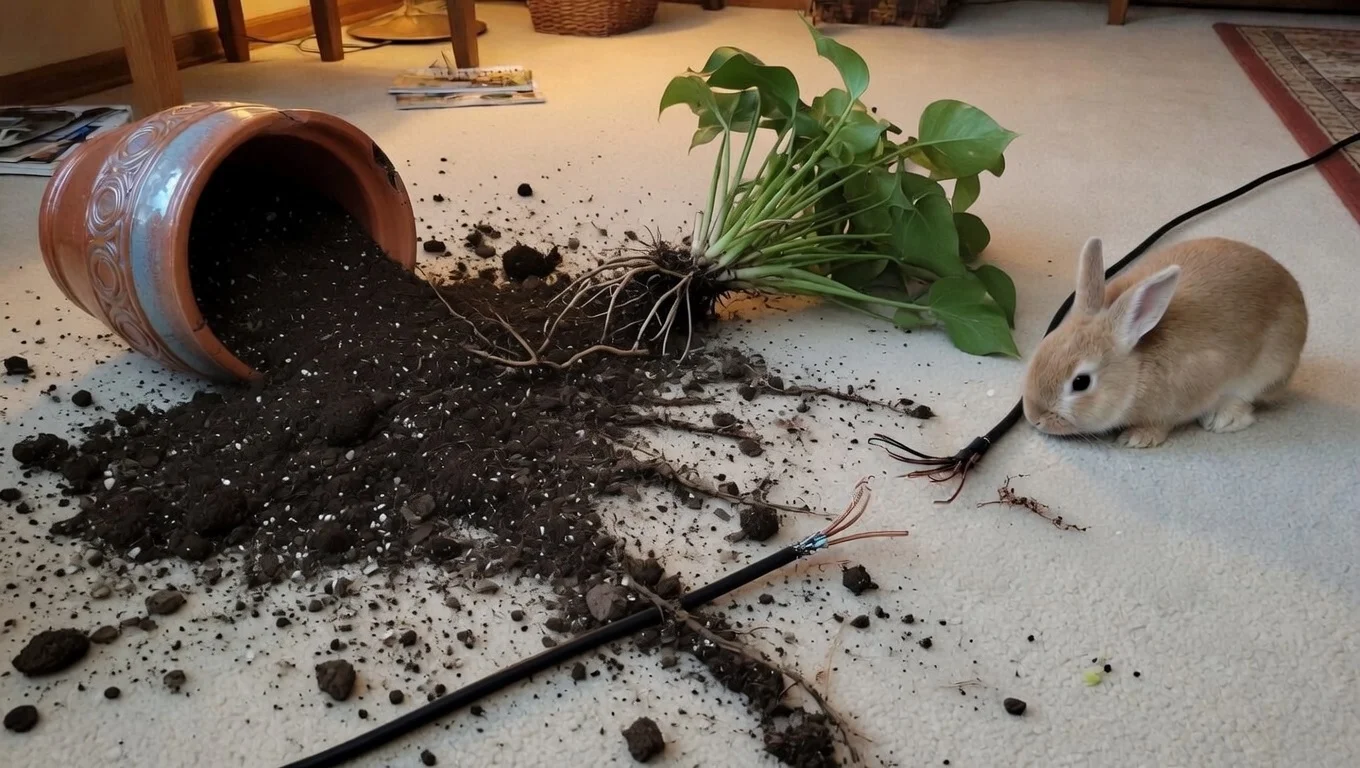
Rabbits are natural chewers — it is not a bad habit, it is how they keep their teeth worn down and how they explore the world. But this instinct turns your baseboards, cords, and furniture into tempting targets.
Rabbit-proofing is not about restricting your rabbit. It is about creating a space where they can roam safely while keeping your home intact. A well-proofed space means fewer vet bills, less frustration, and a happier rabbit.
Electrical Cords — The Number One Danger
Electrical cords are the most dangerous item in your home for a rabbit. They are chewy, they are everywhere, and biting through one can cause serious injury or death. Every cord within your rabbit’s reach needs to be protected.
Plastic cord covers work well for simple setups. For more thorough protection, run cords behind furniture or use wire conduit — flexible tubing that slides over exposed wires. If your rabbit has access to an entire room, consider blocking off areas with baby gates rather than trying to protect every cord individually.
Baseboards and Woodwork
Your rabbit will find the baseboards — it is guaranteed. The easiest solution is bitter apple spray. Most rabbits dislike the taste and will avoid sprayed areas. Apply it to baseboards, chair legs, and any woodwork at rabbit height.
For areas your rabbit frequents, you can also install plastic channel guards along the bottom of walls. They are inexpensive and save your trim from becoming chew marks.
What If My Rabbit Jumps a Lot?
If your rabbit is a jumper — some breeds can reach 2 feet or more when standing on their hind legs — you may need to extend protection higher than you expect. Watch where your rabbit reaches when they stand upright and proof those areas too.
The good news: you do not need to protect every piece of wood in your home. Focus on three zones — the floor level, the height your rabbit reaches when standing, and anything at eye level they can climb to. Trimmed tree branches, wooden furniture legs, and wicker baskets tend to be the biggest targets. Leave your antique oak bookshelf in a room your rabbit does not access, and you will be fine.
Houseplants — Know What Is Toxic
Many common houseplants are toxic to rabbits. Lilies, pothos, philodendrons, and azaleas can cause serious health problems if chewed. Before letting your rabbit roam, identify every plant in your home and move toxic ones out of reach.
Use our toxic plants checklist to identify which plants in your home need to go — and which ones are safe. Print it out and walk room by room.
Safe alternatives include wheatgrass, cat grass, and rabbit-safe herbs grown specifically for chewing. Providing safe chew options reduces the temptation to sample your other plants.
Furniture and Carpets
Carpets are irresistible to many rabbits. The fibers feel like hay. Use exercise pens to define a safe zone with hardwood or tile flooring, or lay down washable rugs in areas where your rabbit roams.
For furniture legs, apply bitter apple spray or wrap them in cardboard protectors. If your rabbit is a particularly aggressive chewer, consider providing apple wood sticks or seagrass mats as alternatives.
Products That Actually Work
Every room has its own risks. Here is what to look for in the spaces where rabbits spend the most time.
Living Room
This is where most rabbits roam the most, and where the most cords tend to be. TV stands, gaming consoles, phone chargers, and lamp cords are all high priority. Position cords behind furniture whenever possible, and use cord covers on anything that must cross open floors or baseboards.
Area rugs made of natural fiber (jute, seagrass, cotton) are safer than synthetic wall-to-wall carpet. They give your rabbit something to hop on and they are easy to wash.
Bedroom
If your rabbit has bedroom access, move charging cables off nightstands and dressers. Bedskirts and throw blankets hanging to the floor are common targets — rabbits squeeze underneath and chew from below. Consider a floor-length bedspread that blocks access, or use a baby gate to keep your rabbit out while you sleep.
Closet doors are another weak point. If your rabbit can reach closet handles, they will open doors and help themselves to your shoes, linens, or anything stored inside.
Kitchen
Kitchens carry the highest concentration of dangers for rabbits. Cleaning products, medications, and pantry items must be stored in cabinets your rabbit cannot open. Many human foods — bread, pasta, nuts — are not toxic but can cause digestive upset, so keep pantry doors closed or blocked.
Refrigerator coils and exposed under-cabinet wiring are hidden hazards. If your rabbit can fit under kitchen appliances, block access with a panel or exercise pen.
Bathroom
Toilet seats are a drowning risk for curious rabbits — always keep the lid down. Cleaning products and medications in bathroom cabinets need the same protection as kitchen hazards. Rabbits are also drawn to bathmats and towels, which absorb moisture and odors they find interesting.
Tile floors can be slippery for rabbits. Lay down washable rugs in the zones where your rabbit commonly hops to prevent injuries.
Instead of trying to rabbit-proof your entire home, start with one room. Use baby gates or exercise pens to create a secure area where your rabbit can explore without constant supervision. As your rabbit proves they are trustworthy in that space, expand gradually.
This approach is less overwhelming for you and safer for your rabbit as they learn household boundaries.
Products That Actually Work
Not all rabbit-proofing products are created equal. After years of community testing, a few items consistently rise to the top.
Bitter Apple Spray: The classic for a reason. Apply generously to wood, fabric, and baseboards. Reapply every few days at first — rabbits will test whether the taste has faded. Brand does not matter much, but the spray bottle matters: look for one with a long spray nozzle so you can reach under furniture easily.
Cord Covers: Cable Zip and Y Zacro make solid flexible covers that slide over individual cords. For heavy-duty protection, Beter has rigid channel guards that mount to baseboards with adhesive strips — these hold up to determined chewers better than soft covers.
Baseboard Protectors: Clear plastic corner guards installed along the bottom 12 to 18 inches of walls. They are nearly invisible once in place, which means they do not disrupt your decor while they protect your trim.
Baby Gates: Even gates marketed for babies are too short for most rabbits. Look for gates at least 30 inches tall. Regalo and Midwest Homes for Pets make sturdy pressure-mounted gates with fine vertical slats that are difficult to squeeze through or climb.
Exercise Pens: The Midwest Wide exercise pen is the community favorite — it connects in multiple configurations, stands 24 inches tall, and folds flat for storage. Use it to block rooms, create runways along walls, or enclose a safe zone in the middle of a room where no walls exist.
Rabbit-proofing takes some upfront effort, but it pays off. A safe rabbit is a happy rabbit, and a proofed home means you can relax knowing your bunny is exploring without getting into trouble. Start with the essentials — cords, baseboards, and toxic plants — then build from there. Your rabbit will thank you with months of joyful, trouble-free company.
Apartment-Specific Proofing
Renting changes the stakes. You cannot drill into walls, install permanent baseboard guards, or leave visible damage when you move out. The good news: most proofing solutions are temporary.
For cords under desks, use adhesive-backed cord clips to route cables along the underside of desk surfaces — completely out of sight and reach. Flexible cord covers work on top of baseboards without leaving residue when removed, though test a small area first on painted walls.
Baseboard protection in rentals means lightweight plastic channel guards with command adhesive strips. Remove them slowly when you leave and the walls should come out clean. Avoid bitter apple spray on painted walls — it can leave a dull residue that does not buff out.
If your lease has restrictions on modifications, communicate with your landlord in writing first and keep records of any agreed changes. Most landlords care about preventing damage, not about the temporary measures you use to prevent it.
What “Failed” Bunny-Proofing Looks Like
Proofing fails in two main ways: incomplete coverage and products that could not stand up to your rabbit.
Incomplete coverage: You protected the TV cord but missed the phone charger. You cord-covered the living room but your rabbit discovered the bedroom at 2 a.m. When this happens, do not frame it as your rabbit being naughty — they are just being rabbits. Go back and audit the space. Walk the room at floor level and look for anything within reach that has a cord, tastes like wood, or contains an interesting smell.
Product failure: A rabbit that really wants to chew can damage or remove cord covers, pull bitter apple spray off with persistent nibbling, or squeeze through baby gate slats. When products fail, upgrade to a stronger version — rigid channel guards instead of flexible covers, bitter apple gel instead of spray, gates with vertical bars instead of horizontal.
The fix is always the same: identify the gap, close it, move on. Proofing is not a one-time project. It is an ongoing conversation with your rabbit as they grow, learn, and inevitably discover something new to investigate.
Print our free Setup Checklist for a room-by-room walkthrough you can use to proof your home in a single afternoon.
Ready to Dive Deeper?
Print our free Rabbit Supply Shopping List to make sure you have everything you need for your rabbit.
Download the Shopping List Browse All Printables