This page is your complete rabbit feeding reference. It covers exactly what to put in the bowl, how much to give, and what to avoid. Bookmark it — you will come back to it.
⚠️ Medical information: This article is for general educational purposes and is not a substitute for professional veterinary care. Always consult a rabbit-savvy veterinarian for health concerns. See our full disclaimer.
What to Feed Your Rabbit: Quick Reference
Not sure how much to give or how often? This table lays out the four diet components in order of importance.
| Food Type | Amount | Frequency | Notes |
|---|---|---|---|
| 🌾 Hay (Timothy or Orchard) | Unlimited — refill daily | Always available | Should make up 70–80% of diet. If the pile is not shrinking, call your vet. |
| 🥬 Leafy Greens | 1–2 cups per 5 lbs body weight | Once or twice daily | Offer 3–5 varieties per day. Remove uneaten greens within a few hours. |
| 🫘 Pellets (Timothy-based) | 1 tbsp per lb of body weight | Once daily | Skip for most adults if greens and hay are varied. Avoid mixes with seeds or fruit. |
| 🍎 Fruit / Treats | 1–2 teaspoons | 2–3 times per week max | Apple (no seeds), banana, blueberry, strawberry. Low-sugar fruits only. |
The Four Pillars of a Rabbit Diet
Every healthy rabbit diet is built on the same four components, in the same order of priority.
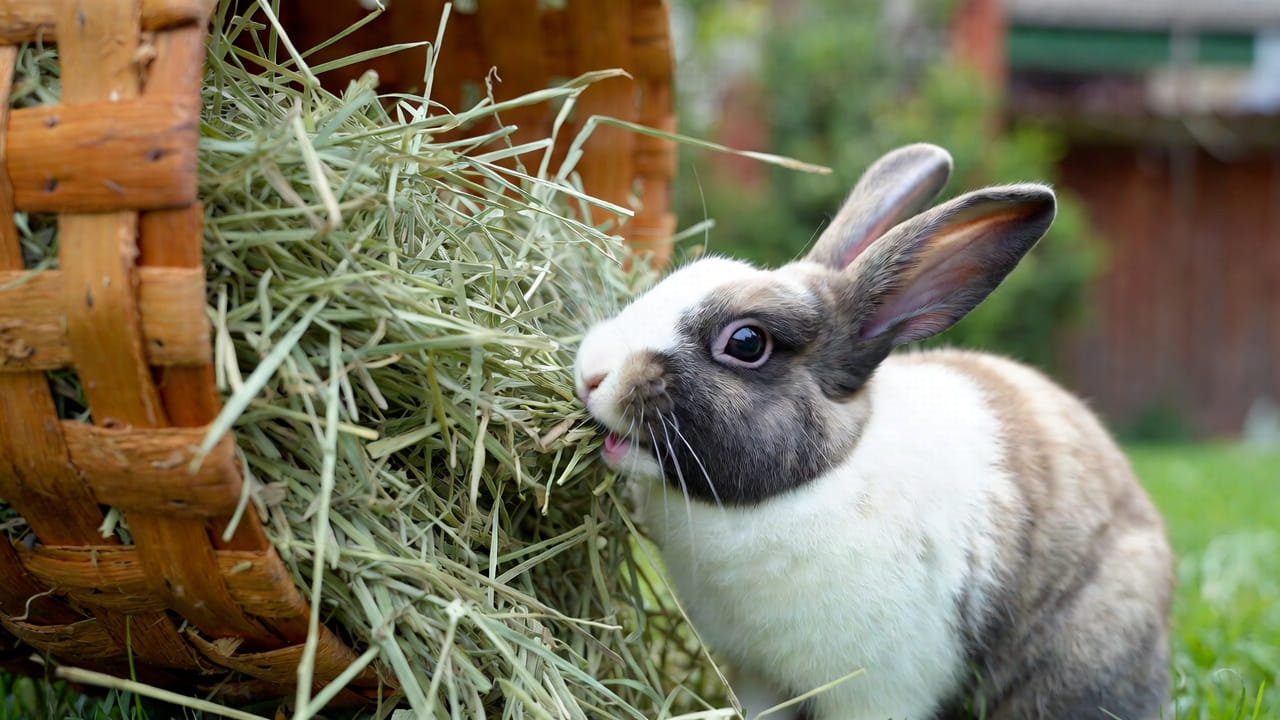
- Hay (70–80% of diet). Timothy or orchard grass, available 24/7. This is the single most important food for your rabbit. It wears down teeth and keeps digestion moving.
- Leafy Greens (10–15% of diet). A daily mix of 3–5 different greens. Romaine, green leaf, cilantro, parsley, basil — rotate to add variety and nutrients.
- Pellets (supplemental). A tablespoon per pound of body weight per day for most adults. Choose timothy-based pellets with no added seeds, nuts, or dried fruit.
- Treats (less than 5%). Fruit should be rare. Herbs like cilantro and basil can be given more freely as healthy alternatives to sugary treats.
Common Questions
Can rabbits eat iceberg lettuce?
No. Iceberg lettuce has very little nutrition and contains lactucarium, which can harm rabbits. Choose darker leafy greens like romaine, green leaf, or cilantro instead.
How much hay should my rabbit eat every day?
Your rabbit should eat a pile of hay roughly the size of their body every day. Hay should make up 70–80% of their diet. If the pile is not shrinking, something is wrong.
What kind of hay is best for adult rabbits?
Timothy hay and orchard grass are the top choices for most adult rabbits. Avoid alfalfa hay unless your vet specifically recommends it — it is too high in calcium and protein for grown rabbits.
How often should I feed my rabbit vegetables?
Vegetables should be offered once or twice daily. A good guideline is 1–2 cups of greens per 5 pounds of body weight. Remove any uneaten vegetables within a few hours to prevent spoilage.
Are pellets necessary for a rabbit's diet?
For healthy adult rabbits, pellets are optional if the diet already includes a wide variety of fresh greens and unlimited hay. If you do feed pellets, choose timothy-based pellets without seeds or dried fruit and limit to about 1 tablespoon per pound of body weight.
What fruits are safe for rabbits?
Small amounts of apple (no seeds), banana, blueberry, strawberry, and melon are safe. Fruits should be given as treats only — a teaspoon or two per day at most. The sugar content in fruit can cause digestive issues if overfed.
My rabbit is refusing to eat hay. What do I do?
First, verify the hay is fresh and free of dust or mold. Try offering a different type of hay — some rabbits prefer orchard grass over timothy. If a rabbit stops eating hay suddenly, it can be a sign of dental problems and warrants a vet visit.
Can rabbits eat carrots?
Carrots are often misunderstood. They contain sugar and should be given sparingly — a small piece a few times a week at most. The leafy carrot tops are a much better option and can be given more freely.
What foods are toxic to rabbits?
Avoid all onions, garlic, avocado, chocolate, caffeine, rhubarb, potato tops, and any fruit seeds or pits. Even safe foods like iceberg lettuce can be harmful. When in doubt, leave it out.
How do I introduce new foods to my rabbit?
Introduce one new food at a time, in a small amount — no more than a tablespoon. Wait 24–48 hours and watch for changes in droppings, behavior, or appetite. If everything looks normal, you can gradually increase the amount.
Common Feeding Mistakes
Most rabbit diet problems come from a handful of easily avoidable errors. Review these — at least one will probably surprise you.
Replacing Hay with Pellets
Pellets should supplement hay, not replace it. A rabbit fed mainly pellets will develop dental problems, digestive slowdowns, and obesity. Hay is non-negotiable.
Feeding the Wrong Greens
Not all greens are safe. Iceberg lettuce, spinach in large amounts, and any part of the nightshade family can harm your rabbit. Stick to safe leafy greens and introduce one new one at a time.
Overfeeding Fruit
Fruit is high in sugar and should be treated as a rare indulgence. Many owners unintentionally cause digestive upset by offering too much fruit. Think teaspoon-sized servings, not handfuls.
Feeding Alfalfa to Adult Rabbits
Alfalfa hay is a legume, not a grass hay. It is too high in calcium and protein for most adult rabbits and can cause urinary sludge and kidney problems. Save alfalfa for young kits under six months.
Making Sudden Diet Changes
A rabbit's digestive system is built for gradual change. Switching from hay-only to a full diet overnight, or swapping pellet brands suddenly, can trigger GI stasis. Introduce new foods over 7–10 days.
Building a Daily Feeding Schedule
Consistency matters more than perfection. A rabbit whose day follows a predictable rhythm eats better, digests better, and shows signs of illness more clearly because you know what normal looks like. Here is how to build a simple daily routine that works.
- Morning (before you leave for work): Check the hay pile. Refill if needed. A rabbit who wakes up to a fresh pile of hay is more likely to eat first thing — which is exactly what their digestive system needs after hours of not eating overnight. Give fresh water at the same time.
- Midday or early afternoon: If you are home, offer a small handful of fresh greens. If you are not home, this meal can wait until evening. The key is that greens should not sit in the bowl for more than a few hours — remove anything uneaten before it wilts or spoils.
- Evening: This is when most rabbits are most active and most interested in food. Offer a fresh portion of greens and check the hay again. This is also a good time to observe your rabbit — watch how they move, how they eat, and what their droppings look like. Healthy droppings are round, firm, and consistent in size.
- Pellets (if you feed them): Offer once daily, preferably in the evening. A single feeding is easier to track than scattering throughout the day, and it lets you notice immediately if your rabbit is leaving pellets behind — an early sign something is off.
- Treats: Reserve for training sessions, bonding moments, or medication administration. Writing treat time into the schedule keeps it from becoming accidental overfeeding.
A simple schedule like this takes less than five minutes of active work per day. The rest is refill-and-observe. The payoff is a rabbit who eats consistently, a digestive system that stays active, and a owner who notices problems early because they are paying attention every day.
Transitioning Foods: How to Do It Right
A rabbit's digestive system needs time to adjust. Rushing a diet change is one of the most common causes of GI stasis.
- New hay type: Mix the new hay with the old at a 25/75 ratio for a few days, then gradually increase the new hay over 7–10 days.
- New vegetables: Introduce one new green at a time. Give a small amount and wait 24–48 hours. If droppings look normal, increase the amount.
- New pellets: Mix the new pellets with the old at 25/75 for a week, then transition fully. Sudden pellet changes can cause appetite loss even if the pellets look similar.
- General rule: Whenever you add something new, subtract something old proportionally so the total volume stays familiar to your rabbit.
Free Printable: Rabbit Feeding Guide
Print this feeding chart and keep it on your fridge. It covers the four diet pillars, portion sizes, and the foods to avoid.
Download the Free Feeding Guide →What Good Rabbit Care Looks Like
Proper rabbit care is consistent, daily, and rooted in understanding rabbit biology and behavior. Rabbits are prey animals — they hide signs of illness and stress instinctively, which means attentive observation is the foundation of good care.
The core components of good rabbit care are straightforward: unlimited grass hay, daily fresh water, appropriate pellets and vegetables, a safe and spacious enclosure, daily exercise outside the enclosure, regular grooming, spay or neuter, and annual veterinary checkups with a rabbit-savvy exotic veterinarian.
Good rabbit care also means providing mental stimulation. Rabbits are intelligent and curious — boredom leads to problem behaviors and poor mental health. Rotate toys, change the layout of their play area occasionally, offer foraging opportunities, and spend time interacting with your rabbit every day.