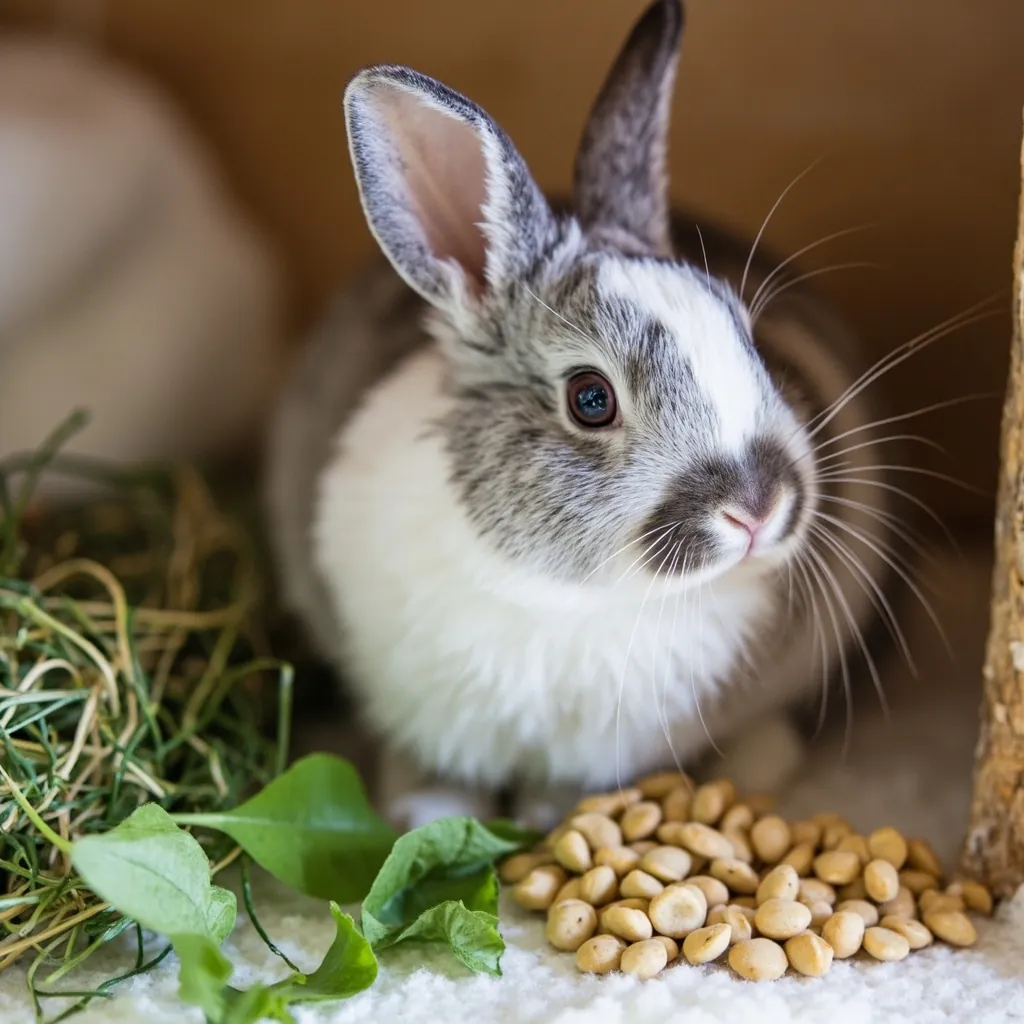
Welcome. You have just brought home a rabbit — or you are getting ready to — and you want to do this right. That instinct matters. This guide walks you through everything that matters in your first month.
⚠️ Medical information: This article is for general educational purposes and is not a substitute for professional veterinary care. Always consult a rabbit-savvy veterinarian for health concerns. See our full disclaimer.
Before You Bring Your Rabbit Home
The most important prep work happens before your rabbit arrives. Setting up correctly from day one means fewer problems, faster bonding, and a smoother transition for both you and your rabbit.
Rabbit-Proof Your Space
Rabbits chew. Not occasionally — constantly. Electrical cords, baseboards, furniture legs, houseplants, and shoe laces are all on the menu. Walk your home at floor level before your rabbit arrives and identify every hazard.
Use bitter apple spray on wood trim and baseboards. Run cords through cable covers or conduit. Move toxic houseplants out of reach. This is not optional — unsecured cords can kill your rabbit, and toxic plants can cause serious illness.
Our Rabbit-Proofing Guide has a room-by-room checklist you can complete in an afternoon.
Set Up the Enclosure First
Your rabbit needs a defined space that is safe and comfortable while they learn your home. This can be a large x-pen, a corner of a room with baby gates, or a dedicated rabbit room. Keep the space relatively small at first — a rabbit who has access to too much territory too quickly will claim all of it as bathroom space.
- Litter box: Low-sided, filled with paper-based litter topped with hay
- Hay: Unlimited timothy or orchard grass hay — this is their most important food
- Water: A heavy ceramic bowl (easier than a bottle for most rabbits)
- Hideaway: At least one enclosed space where they can feel safe and unseen
- Food bowl: Shallow, stable, easy to reach
Stock Up on Hay
Your rabbit's entire digestive system depends on constant hay consumption. You cannot give them too much hay — fill the litter box, put a pile next to the hideaway, keep it available at all times. Timothy hay and orchard grass are the best everyday options.
Our Hay Guide covers every major type and what to buy.
The First 24 Hours
Your rabbit is going to be scared. They just traveled in a carrier, ended up in a new place with new smells, and are being approached by a large unfamiliar animal (you). Everything about this is stressful for them.
Give them time. Here is what to do:

- Set them up quietly in their enclosure. Open the carrier, let them hop out on their own. Do not reach in and pick them up.
- Leave them alone. Resist the urge to visit, poke, or hold them. Let them hide if they want to. Do not take it personally.
- Sit nearby and read or work. Let them get used to your presence without pressure.
- Speak softly. A calm voice helps them learn that you are not a threat.
- Offer their first meal. Fresh herbs (cilantro, parsley) or a piece of romaine lettuce — something to encourage eating in a stressful moment.
Most rabbits will eat within a few hours of arriving if offered something appealing. If your rabbit refuses food for more than 12 hours, contact your vet.
Building Trust in Week One
Bonding with a rabbit is different from bonding with a dog. You cannot train a rabbit to trust you with treats and repetition in the same way. You earn trust by being patient, predictable, and non-threatening.
The Body Language You Need to Learn
Rabbits communicate constantly through posture and movement. A rabbit who is still and watching you is assessing you. A rabbit who flops on their side is relaxed. A rabbit who thumps is alarmed. A rabbit who nudges your hand is curious — or demanding attention.
Learn the basics before you try to interpret what your rabbit is telling you. Our Rabbit Body Language Guide covers the full range of postures and what they mean.
Sit on the Floor
The fastest way to build rapport with a new rabbit is to sit on the floor. Get down to their level. Read a book, use your phone, or just exist quietly. Let them come to you. Do not reach for them — let them choose to approach.
Most rabbits will approach within a few days. Some take longer. Do not rush it.
Let Them Set the Pace
Some rabbits want to be pet immediately. Others want to be left alone for a week. Watch for cues. A rabbit who is sniffing you, nudging you, or coming close is curious. A rabbit who is flattening against the floor or moving away is not ready.
When they do approach and accept a gentle pet, move slowly. Avoid sudden movements or loud sounds. You are teaching them that you are safe.
The Teenage Phase Is Coming
Around 3 to 4 months of age, most rabbits enter adolescence. Their hormones spike, and they may become aggressive, destructive, or impossible to litter train for a few weeks. This is temporary — but it is also the phase where many rabbits get surrendered to shelters.
Prepare yourself. It gets better after spay or neuter. Our Teenage Phase Guide explains what to expect and how to handle it.
Diet: The Non-Negotiables
Hay, Hay, and More Hay
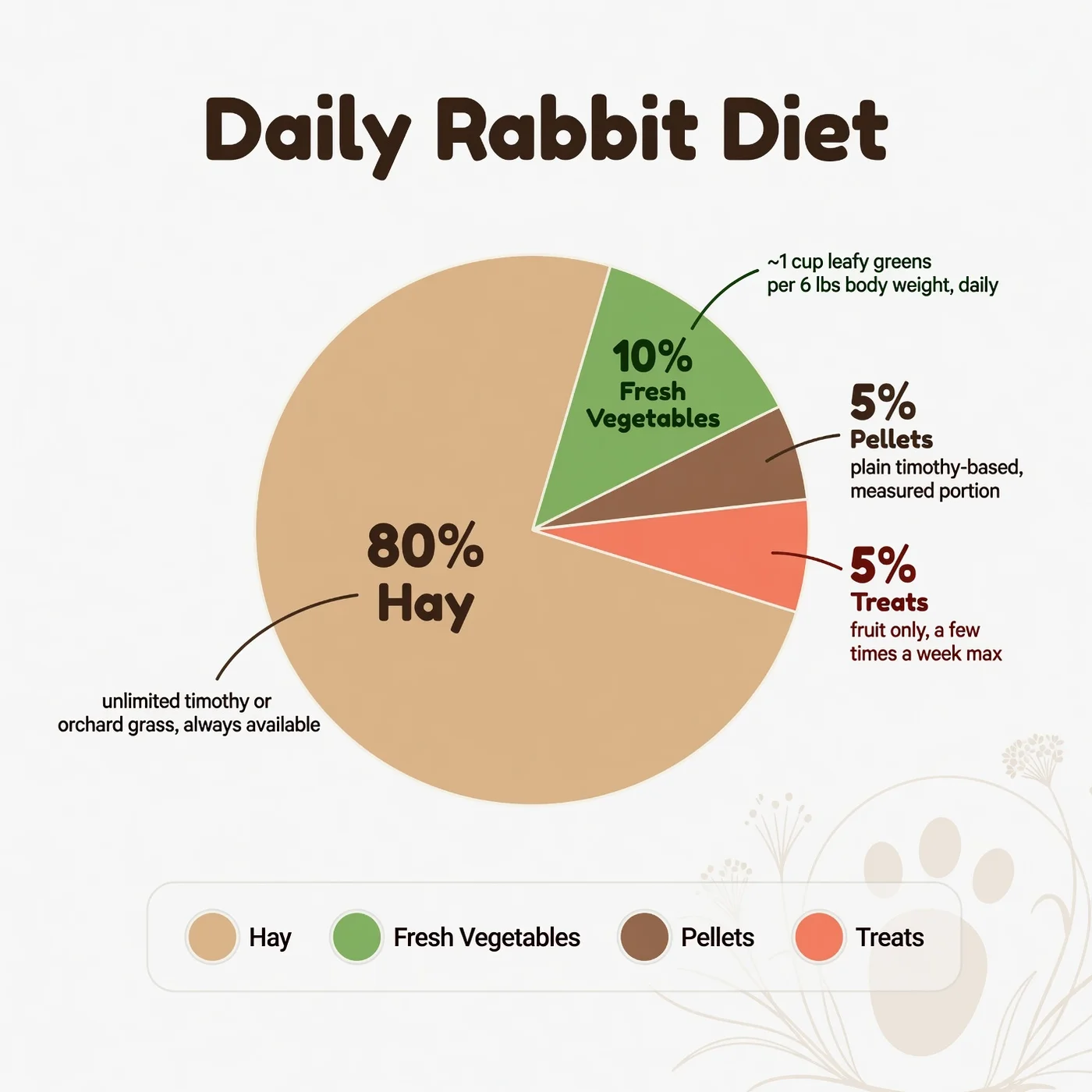
Unlimited timothy or orchard grass hay at all times. This is 80% of what your rabbit eats. It wears down their continuously growing teeth, keeps their gut moving, and provides the fiber their digestive system needs to function.
Pellets
A measured portion of plain, timothy-based pellets once or twice a day. How much depends on your rabbit's size and weight — our What Can Rabbits Eat guide has the full breakdown. Avoid mixes with seeds, dried fruit, or colored bits.
Fresh Vegetables
Start introducing leafy greens in the second week. Begin with one type at a time in small amounts to watch for digestive upset. Good starter greens: romaine lettuce, butter lettuce, cilantro, parsley.
Once daily portion of leafy greens — about one cup per six pounds of body weight. Our Food Database shows which vegetables are safe, which need caution, and which to avoid entirely.
Treats
Fruit in very small amounts — a couple of berries, a small apple slice — once or twice a week. Fruit is high in sugar and can cause digestive upset if overfed. Avoid anything with added sugar, dairy, grains, or chocolate.
Health: Finding a Vet Now
Do not wait for an emergency to find a rabbit-savvy veterinarian. Most general-practice vets do not treat rabbits, and those who do may not have deep experience with rabbit-specific emergencies.
Search for a rabbit-savvy vet before your rabbit arrives or in the first week. The How to Find a Rabbit Vet guide has step-by-step instructions and a list of questions to ask prospective clinics.
Schedule the Spay or Neuter
If your rabbit is not already spayed or neutered, schedule the surgery. This is one of the most important health decisions you will make. Unspayed does face up to an 80% risk of uterine cancer by age five. Unneutered bucks can become aggressive and are difficult to litter train.
Most rabbits should be spayed or neutered between 4 and 6 months of age. Ask your vet for guidance on timing.
Watch for These Early Signs
Rabbits hide illness brilliantly. By the time obvious symptoms appear, the problem is usually advanced. Know what's normal for your rabbit so you can spot deviations early.
- Reduced or absent eating for more than a few hours
- No fecal production for more than 12 hours
- Droppings that are smaller, irregular, or fewer than usual
- Hunched posture, grinding teeth, or reluctance to move
- Wet chin, eye discharge, or sneezing
Our Signs Your Rabbit Is Sick guide has the full checklist.
Litter Training: How to Start
Litter training works with rabbits' natural bathroom instincts rather than against them. Rabbits tend to pick one corner as their latrine — your job is to put the litter box where they have already chosen to go.
Our Litter Training Guide covers setup, litter selection, what to do on free-roam days, and how to handle regressions. Read it early — the first week is when habits form.
The First 30 Days Checklist
Print this and check it off as you go:
- Day 1: Set up enclosure, rabbit-proof the room, let rabbit settle quietly
- Days 2–3: Sit on the floor nearby. Offer first greens. Let rabbit approach you.
- Days 4–7: Begin gentle petting when rabbit is calm. Introduce one new vegetable.
- Week 2: Research and call rabbit-savvy vets. Schedule the spay/neuter.
- Week 2: Start offering leafy greens daily. Add variety gradually.
- Week 3: Begin supervised free-roam time in a safe, rabbit-proofed area.
- Week 4: Confirm your vet appointment. Continue bonding and training.
Every rabbit adjusts on their own timeline. Some bond in days. Some take months. Your job is to be patient and consistent, and to enjoy the process of learning who your rabbit is.
Download Our Free Guide
Want a condensed version you can read, print, and reference throughout your first month? Our free First 30 Days guide covers setup, daily routines, what to watch for, and when to call the vet — all in one downloadable PDF.
Ready to Dive Deeper?
Get our free First 30 Days guide — everything you need for your first month with your rabbit, in one downloadable PDF.
What Good Rabbit Care Looks Like
Proper rabbit care is consistent, daily, and rooted in understanding rabbit biology and behavior. Rabbits are prey animals — they hide signs of illness and stress instinctively, which means attentive observation is the foundation of good care.
The core components of good rabbit care are straightforward: unlimited grass hay, daily fresh water, appropriate pellets and vegetables, a safe and spacious enclosure, daily exercise outside the enclosure, regular grooming, spay or neuter, and annual veterinary checkups with a rabbit-savvy exotic veterinarian.
Good rabbit care also means providing mental stimulation. Rabbits are intelligent and curious — boredom leads to problem behaviors and poor mental health. Rotate toys, change the layout of their play area occasionally, offer foraging opportunities, and spend time interacting with your rabbit every day.