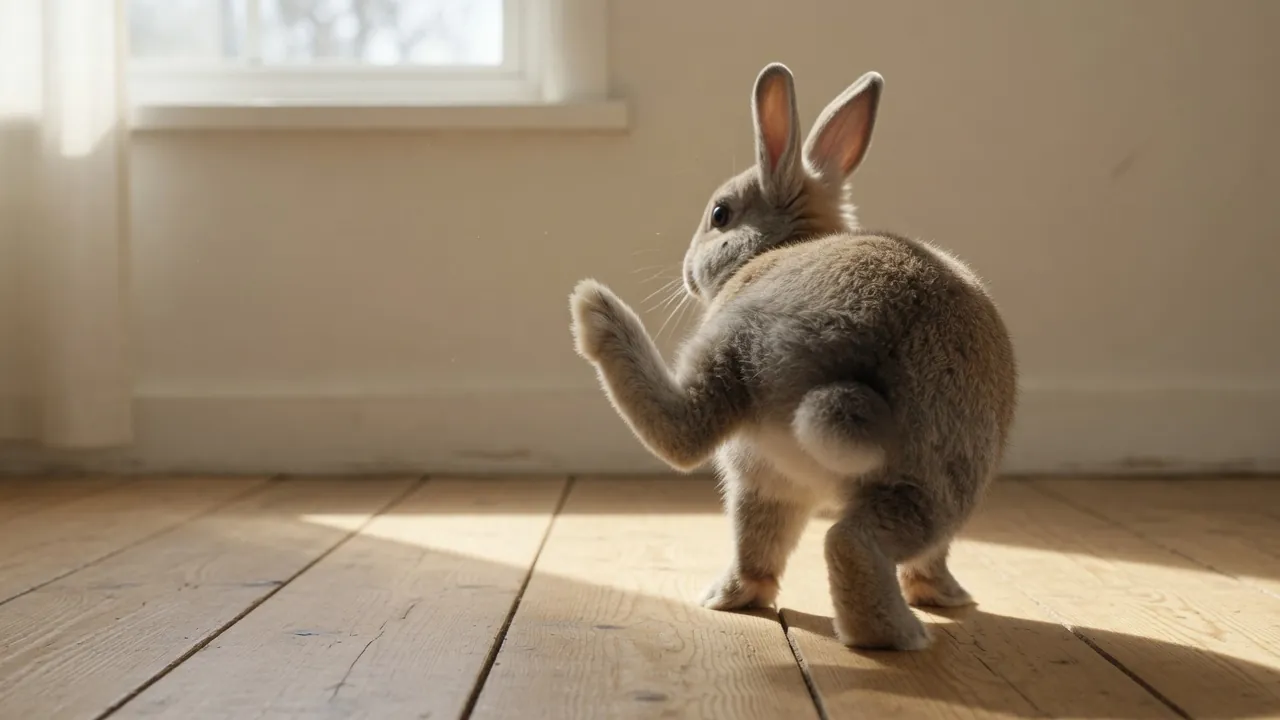
You did everything right. You researched, you prepared, you brought home the sweetest baby rabbit. For three or four months, they were perfect — curious, cuddly, easy. Then one morning you wake up and your rabbit has become a stranger. They grunt at you. They lunge. They refuse to be picked up. They chew the furniture, the cords, your favorite shoes. They ignore you entirely.
This is not your rabbit. This is your rabbit in the teenage phase.
And it is completely normal.
The Good News
The teenage phase is temporary. Most rabbits emerge from it between 6 and 12 months, depending on breed. Larger rabbits tend to mature later and may stay in the teenage phase longer. The rabbit you fell in love with is still in there — and they come back. You just have to get through it first.
⚠️ Medical information: This article is for general educational purposes and is not a substitute for professional veterinary care. Always consult a rabbit-savvy veterinarian for health concerns. See our full disclaimer.
When the Teenage Phase Hits
Most rabbits enter adolescence between 3 and 4 months of age. At this point, their bodies begin producing sexual hormones — even if they are not yet sexually mature in the full sense. This hormonal surge triggers behavioral changes that can be abrupt, intense, and unlike anything you have seen from your rabbit up to that point.
The teenage phase typically peaks between 4 and 6 months and begins to resolve within 6 to 12 months. Some larger breeds (such as Flemish Giants) may not fully resolve their adolescent behaviors until 12 to 18 months. If your rabbit is spayed or neutered during this window, most of the behavioral changes will settle within 4 to 6 weeks after the surgery.
Why Hormones Cause These Behaviors
Rabbits in the wild establish territories and compete for mates. Those instincts are hardwired, and they activate during adolescence regardless of whether there is another rabbit around. Your rabbit may behave as if they need to defend their space from you — because their hormones are telling them this is what they should be doing.
This is not personal. It is not a reflection of your relationship or your rabbit’s affection for you. Your rabbit is not punishing you or suddenly decided they do not like you. They are being driven by biology that is stronger than their training or their bond with you. Understanding this makes it easier to not take the behavior personally — and to stay consistent with your approach.
Specific Behaviors to Expect
Lunging and Circling
Your rabbit may lunge at your hands, feet, or face — especially when you enter their space or reach toward them. They may also circle around your feet, sometimes in tight, rapid loops. This is a territorial and mating display. The lunging is often accompanied by a grunt or a sharp sound. Some rabbits will also nip when they lunge — not always a hard bite, but a warning.
Nipping and Biting
Adolescent rabbits experiment with biting more than they did as babies. This ranges from gentle exploratory nips (which may still hurt because rabbit teeth are sharp) to harder bites that break skin. The nipping is often targeted at hands, ankles, and edges of clothing. Some rabbits grab fabric with their teeth and pull. This is all testing behavior — your rabbit is figuring out what happens when they bite things.
Refusal to Use the Litter Box
A previously well-trained rabbit may start urinating outside the litter box during the teenage phase. Males (and some females) may spray urine to mark territory. They may also droptheir waste in unusual spots — on the couch, on beds, in corners they previously left alone. This is hormonal marking behavior, not a regression in training. Spaying or neutering resolves most of this.
Destructiveness
If you thought baby rabbits chewed a lot, adolescent rabbits chew with a purpose. Wires, baseboards, furniture corners, carpet edges, shoes, books — anything within reach is fair game. Your rabbit is not just exploring now; they are actively “redecorating” their territory. This destructiveness peaks around 5 to 7 months and can be intense. Rabbit-proofing is not optional during this phase — it is essential for your rabbit’s safety.
Refusal to Be Picked Up
Many rabbits who tolerated being held as babies suddenly refuse it completely during adolescence. This may be because being picked up feels like a predator attack to a rabbit in a territorial state of mind — you are literally lifting them away from their territory. Some rabbits struggle, kick, and thrash when picked up during this phase. Respect this boundary even though it is frustrating. Let your rabbit come to you instead of forcing interaction.
Aggression Toward Other Rabbits
If you have multiple rabbits and introduced them before adolescence, you may find that an adolescent rabbit starts behaving aggressively toward their previously calm partner. Hormones drive rabbits to establish dominance, and the bonded pair may need to be separated temporarily and re-bonded after spaying or neutering.
Random “Freezes” and Reactive Outbursts
Your rabbit may suddenly freeze in place, then explode into a burst of running, jumping, or kicking — what many rabbit owners call “the zoomies” but in an adolescent rabbit, this can look more frantic and reactive than the playful binkies of a younger baby. Some rabbits also thump their hind legs more frequently and for longer durations during adolescence.
Changes in Affection
A rabbit who followed you everywhere may suddenly want nothing to do with you. They may retreat to their hidey house and only come out when you are not looking. They may not solicit attention the way they used to. This does not mean your bond is destroyed — it is a hormonal shift. The affection comes back after neutering and the teenage phase passes.
The Importance of Spay and Neuter: The Real Answer to Ending the Phase
The single most effective thing you can do to shorten and reduce the intensity of the teenage phase is to spay or neuter your rabbit. This is a permanent surgical solution to a hormonal problem. After the hormones are removed, the behaviors driven by them — lunging, spraying, marking, aggression, destructiveness — decrease significantly within 4 to 6 weeks for most rabbits.
Talk to your rabbit-savvy vet about timing. Most vets recommend waiting until a rabbit is at least 4 months old before performing the surgery, though some do it earlier for males who are showing early hormonal behavior. Females should be spayed before their first heat cycle, which can occur as early as 4 months — but discuss timing with your vet, as some prefer to wait until 5 to 6 months for larger breeds.
The surgery carries some risk (as does any anesthesia), but rabbit-savvy exotic vets perform it routinely and the benefits far outweigh the risks. Unspayed female rabbits have a very high rate of uterine cancer (up to 80% by age 5), making spaying medically necessary as well as behaviorally beneficial. Males can be neutered as soon as the testicles descend, typically around 3 to 4 months.
Tips for Surviving the Teenage Phase Without Giving Up
Do Not Take It Personally
Your rabbit is not rejecting you. They are not suddenlydislike you you. They are being controlled by hormones that are stronger than their affection or their training. Every rabbit owner who has been through this phase has felt the sting of a previously loving rabbit suddenly acting like they want nothing to do with them. It helps to remember: this passes. Your rabbit will come back to you.
Do Not Rehome Your Rabbit
If you are thinking about giving your rabbit away during this phase, please know that you are not alone, and the phase ends. Rabbits who are rehomed during the teenage phase often have a very difficult time — shelters see an influx of adolescent rabbits around 5 to 6 months old from owners who did not know what they were getting into. Your rabbit is not defective. They are being a normal adolescent rabbit. See it through. You will be glad you did.
Stay Consistent with Rules and Boundaries
Even though your rabbit is acting out, continue to enforce the same rules you set before. If your rabbit was not allowed on the couch before, do not let them on the couch now because they are being difficult. Inconsistency teaches your rabbit that rules are negotiable, which makes the behavior worse. Hold the line, but do it calmly and without punishment.
Rabbit-Proof Everything You Cannot Move
During the teenage phase, your rabbit will chew things you did not think they could reach. Protect your space:
- Cover all accessible electrical cords in cable conduits or cord covers
- Use bitter apple spray or lemon juice on furniture edges to deter chewing
- Block access to areas you cannot fully rabbit-proof with baby gates or ex-pens
- Move shoes, books, and other personal items to closed closets or high shelves
- Check under furniture and behind baseboards — adolescent rabbits are creative explorers
Give Your Rabbit Space
Let your rabbit come to you rather than pursuing them. Sit on the floor in their space and let them approach on their own terms. Offer treats from your hand but do not force handling. If your rabbit wants to be in their hidey house, let them. Forcing attention during the teenage phase backfires and can cause lasting trust issues.
Increase Enrichment
Bored rabbits are more destructive rabbits. Increase the enrichment during adolescence to give your rabbit something constructive to focus their energy on. This means more chew toys (apple wood sticks, willow balls, cardboard boxes), more exploration opportunities (tunnels, platforms, boxes to investigate), and more supervised exercise time outside the cage.
Supervise All Rabbit-to-Rabbit Interactions
If you have more than one rabbit, monitor all interactions carefully during the teenage phase. Hormonal aggression between rabbits can escalate quickly, and fights can cause serious injuries. If you see any signs of aggression — fur pulling, chasing that looks hostile rather than playful, nips to the face or genitals — separate the rabbits immediately and keep them in separate spaces until after both are spayed or neutered and you can re-bond them.
Use Positive Reinforcement for Good Behavior
Reward your rabbit when they are calm, gentle, and affectionate — even if these moments are brief. Small treats, calm praise, and gentle petting when your rabbit is in a good state reinforces the behavior you want to see more of. This is more effective than any punishment.
What to Expect After Neutering
After your rabbit is spayed or neutered, give it 4 to 6 weeks for the hormones to fully leave their system. During this time, you should see gradual improvement in behavior. Most rabbits emerge from the teenage phase as calmer, more predictable, and more affectionate versions of themselves — closer to the rabbit you fell in love with when you first brought them home.
The rabbit that ignored you may start seeking you out again. The rabbit that lunged at your ankles may become a rabbit that gently approaches for attention. The rabbit that refused to be picked up may tolerate being held for short periods. The changes are not instant, but they come.
A small number of behaviors may persist after neutering — especially if they have become habitual. A rabbit that learned to nip for attention may still nip occasionally even after the hormones are gone, because the habit is established. Continue to redirect and ignore (do not reward) nipping behavior even after neutering.
Bonding with Your Rabbit During the Teenage Phase
The teenage phase can feel like a setback in your relationship with your rabbit. The good news is that the relationship does not actually reset — it is just temporarily disrupted by biology. You can maintain and even strengthen your bond during this phase:
- Respect boundaries — If your rabbit does not want to be picked up, do not pick them up. If they want to hide, let them hide. Forcing interaction during a mistrustful phase creates more problems than it solves.
- Offer food by hand — Hand-feeding your rabbit’s favorite treats builds positive associations with you. Even a rabbit in the depths of adolescent grumpiness usually takes a treat from a human hand.
- Sit on the floor — Spend time in your rabbit’s space without interacting with them directly. Read a book, watch something on your phone, or just exist in their space. Your rabbit will habituate to your presence and may eventually approach on their own.
- Keep routines consistent — Feed at the same times, keep the cage layout the same, maintain the same general schedule. Predictability is calming during a chaotic hormonal phase.
- Do not punish — Shouting, swatting, or scolding a rabbit does not work and causes fear and mistrust. If your rabbit nips you, redirect with a firm “no” and offer a chew toy instead. Then move on.
Ready to Dive Deeper?
Print our free Rabbit Supply Shopping List to make sure you have everything you need for your rabbit.
Download the Shopping List Browse All Printables
Frequently Asked Questions
Is the teenage phase worse for certain breeds?Larger breeds tend to have longer and sometimes more intense teenage phases than smaller breeds. Flemish Giants, French Lops, and other large breeds may stay hormonal until 12 to 18 months, while smaller breeds like Holland Lops or Netherland Dwarfs may resolve by 6 to 8 months. The intensity also varies by individual rabbit — some adolescents are mild and manageable, others are poster children for rabbit puberty.
My rabbit is spayed/neutered but still acts like a teenager. Why?If your rabbit was spayed or neutered after the teenage phase was already well underway, some habitual behaviors may persist even after the hormones are gone. Some rabbits also have a delayed response to the surgery — it can take up to 8 weeks for all hormonal behaviors to settle. If your rabbit was spayed after their first heat cycle, some behaviors may be more deeply habitual. Work with a rabbit-savvy behaviorist if the behaviors persist past the 8-week mark.
Can I still bond with my rabbit during the teenage phase?Yes — but your approach shifts. During the baby phase, you may have been the one initiating interaction. During the teenage phase, let your rabbit initiate. Offer treats and attention when your rabbit approaches you, but do not chase them or force handling. The bond is still there under the hormones; you just have to let your rabbit set the pace for a while.
Is it normal for my rabbit to bite hard enough to draw blood?Some adolescent rabbits do bite hard enough to break skin. This is more common in some breeds and individuals than others. Nips that break skin should be addressed immediately — say “no” firmly and then ignore your rabbit for a few minutes to show that biting ends the interaction. If your rabbit is a persistent hard biter, consult a rabbit-savvy behaviorist. Hard biting is not something to simply accept, even during adolescence.
My rabbit was perfect after neutering but now, months later, is starting to show some aggressive behaviors again. What is happening?If your spayed or neutered rabbit starts showing hormone-like behaviors (aggression, marking, mounting) after months of calm behavior, there are a few possibilities. Some rabbits have ectopic ovarian tissue that was not removed during the spay surgery and still produces hormones. Others may be reacting to the presence of an entire rabbit in the household (even if they are fixed, they can sense intact rabbits nearby). In rare cases, a rabbit may develop hormone-producing tumors. A vet visit is warranted if hormone-like behavior returns in a previously calm spayed or neutered rabbit.
Should I get a second rabbit to keep my adolescent company?Adding a second rabbit during the teenage phase is usually a bad idea. An adolescent rabbit who is already dealing with territorial and hormonal behavior will often attack a new arrival. Wait until your current rabbit is spayed or neutered and fully settled out of the teenage phase before introducing a new rabbit. The bonding process is difficult enough without adding hormonal aggression to the mix.
.faq-section details { background: white; border-radius: 10px; margin-bottom: 0.75rem; border: 1px solid var(—color-cream-editorial); overflow: hidden; } .faq-section summary { padding: 1rem 1.25rem; cursor: pointer; font-weight: 600; color: var(—color-brown-editorial); list-style: none; display: flex; justify-content: space-between; align-items: center; font-size: 0.97rem; line-height: 1.4; } .faq-section summary::-webkit-details-marker { display: none; } .faq-section summary::after { content: ”+”; font-size: 1.4rem; font-weight: 400; color: var(—color-sage-editorial); flex-shrink: 0; margin-left: 0.5rem; transition: transform 0.2s ease; } .faq-section details[open] summary::after { transform: rotate(45deg); } .faq-section .faq-answer { padding: 0 1.25rem 1rem; color: var(—color-warm-gray); line-height: 1.7; font-size: 0.92rem; } .faq-section details[open] summary { border-bottom: 1px solid var(—color-cream-editorial); }