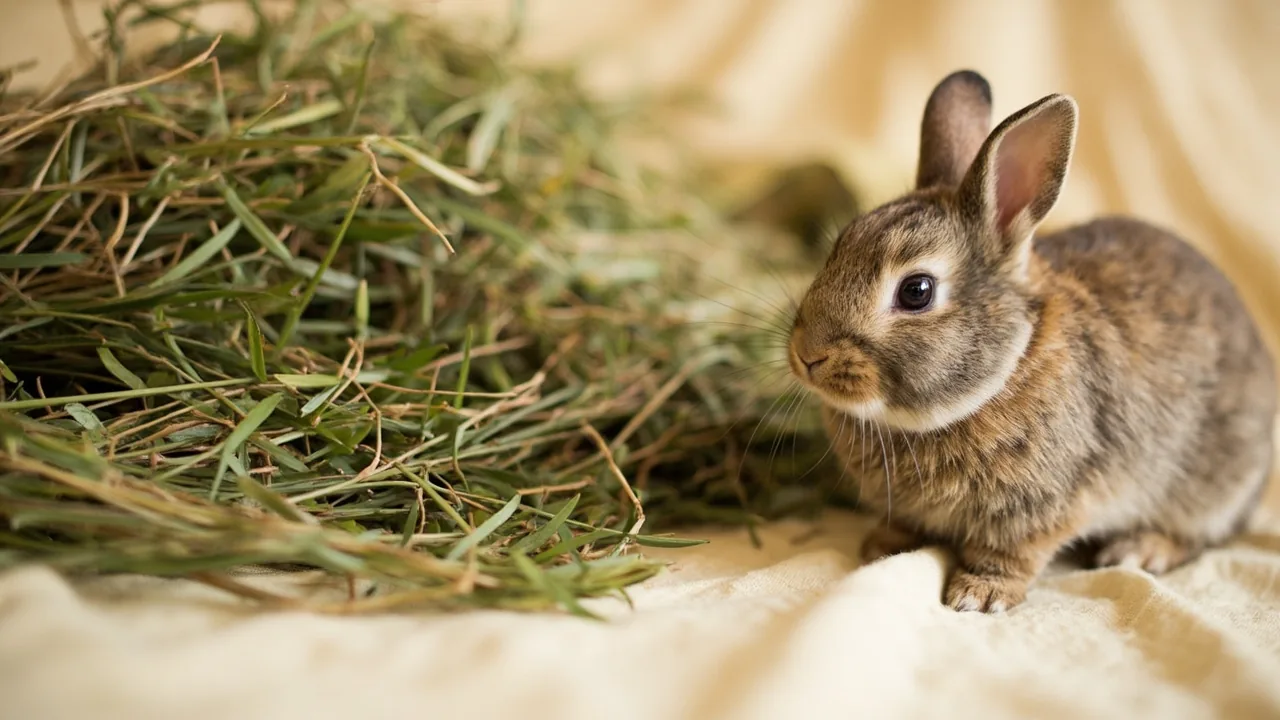
If you have been reading this site for any length of time, you already know how I feel about hay. I have said it before and I will say it again: hay is not a supplement. It is the foundation of everything. The moment I understood that — really understood it — was the moment rabbit care became dramatically simpler.
But not all hay is the same. Timothy, orchard grass, meadow, oat — each type has a different nutritional profile, texture, and ideal use case. Choosing the wrong hay for your rabbit’s age, health, or preferences can mean a rabbit who simply will not eat enough. And a rabbit who does not eat enough hay is a rabbit on a fast track to dental problems and GI stasis.
This guide cuts through the noise and gives you a practical comparison of every hay type, so you can make confident choices for your rabbit.
1. Hay Types at a Glance
| Hay Type | Best For | Protein | Fiber | Can Feed Daily? |
|---|---|---|---|---|
| Timothy Hay | Adult rabbits, everyday feeding | Moderate | Very High | Yes — primary staple |
| Orchard Grass | Picky eaters, seniors, dental issues | Moderate | High | Yes — primary staple |
| Meadow Hay | Mixed diets, variety | Varies | Moderate-High | Supplemental only |
| Oat Hay | Transitioning, picky eaters, seniors | Moderate | High | Supplemental only |
| Alfalfa Hay | Baby rabbits under 12 weeks | High | Moderate | Only for kits |
2. Timothy Hay — The Gold Standard
Timothy hay is a perennial grass native to Europe and central Asia. It has been the backbone of rabbit nutrition for good reason: it has an almost ideal fiber-to-protein ratio for adult rabbits, it wears teeth evenly, and it is widely available year-round in consistent quality.
What It Looks Like
Timothy has long, coarse stems with distinctive fluffy seed heads at the top. The color ranges from green to slightly golden depending on the cut and growing conditions. First cut is coarser and more fibrous; second cut is softer with more leaves; third cut is the softest but can be less nutritious.
Which Cut to Choose
First cut — Coarser, more fibrous. Best for rabbits who need maximum fiber or are prone to obesity. The texture wears teeth down very effectively.
Second cut — The sweet spot for most adult rabbits. Good fiber, good protein, soft enough that most rabbits eat it readily.
Third cut — Softest and leafiest. Good for senior rabbits or those with dental pain who cannot handle coarser hay. Some rabbits find it too soft and ignore it.
Pros
- Ideal fiber-to-protein ratio for adult rabbits
- Consistently available in high quality
- Three cuts allow you to match texture to your rabbit’s needs
- Excellent tooth wear
- Affordable at most pet stores and online
Cons
- Some very picky rabbits refuse it outright
- Quality varies significantly between brands
- Dustier than orchard grass in some batches
3. Orchard Grass Hay — The Picky Eater Solution
Orchard grass (sometimes called cocksfoot) is a perennial grass with a softer, finer stem than timothy. It has a sweeter smell that many rabbits find irresistible, which makes it the single best option for rabbits who have gone on hay strikes.
I keep orchard grass in my rotation for one simple reason: every rabbit I have ever met who refused timothy would eat orchard grass. It is not a coincidence.
What It Looks Like
Orchard grass has shorter, finer stems than timothy with a slightly bluish-green color. The seed heads are less prominent and the overall texture is softer. It smells sweeter — some describe it as almost honey-like.
Which Cut to Choose
Orchard grass does not always have clearly labeled cuts the way timothy does. Look for bright green color and fresh smell regardless of cut.
Pros
- Sweet smell encourages even the pickiest eaters
- Softer texture is easier on rabbits with dental pain
- Good fiber content comparable to timothy
- Mixes well with timothy for variety
Cons
- Can be harder to find in pet stores — online retailers are more reliable
- Tends to be slightly more expensive than timothy
- Softness means less tooth wear than coarser timothy
4. Meadow Hay — Hit or Miss
Meadow hay is exactly what it sounds like: hay cut from a traditional meadow rather than a cultivated grass crop. The problem with meadow hay is the word “meadow” — there is no standard for what it contains. One batch might be mostly fine-stemmed grasses; another might include plants you do not want your rabbit eating.
I treat meadow hay as a supplement, not a staple, for exactly this reason.
What It Looks Like
Variable. Meadow hay is typically a mix of different grasses and wildflowers. You may see bits of clover, daisies, or other plants mixed in. Color and texture vary by batch.
Pros
- Natural variety can be enriching
- Good for rabbits who need encouragement to eat more hay
- Often less expensive than cultivated timothy
Cons
- Inconsistent nutritional profile
- Possible inclusion of plants that are not ideal for rabbits
- Quality control is harder than with single-species hays
- Higher risk of dust and mold if cut in wet conditions
5. Oat Hay — The Transition Hay
Oat hay comes from oat plants harvested after the grain has been removed. It has a distinctively different look from grass hays — you will see the flat oat leaves and the hollow stems. It is a useful transitional hay and a good option for senior rabbits, but it is not ideal as a permanent staple.
What It Looks Like
Oat hay is golden to light green with flat, wide leaves and hollow stems. It has a mild, slightly grainy smell rather than the sweet grassy smell of timothy or orchard.
Pros
- Excellent transitional hay when switching between types
- Palatable for senior rabbits with reduced appetite
- Different texture provides variety in mixed-hay diets
- Good for rabbits recovering from illness who need enticement to eat
Cons
- Lower fiber than timothy — not ideal as a permanent primary hay
- Higher starch content than grass hays
- Hollow stems can be less appealing to some rabbits
- Less effective at tooth wear
6. Alfalfa Hay — For Babies Only
Alfalfa is a legume, not a grass, and it is significantly richer than any of the hays above. It has more protein, more calcium, and more calories. For adult rabbits, this is a liability — too much alfalfa can cause urinary problems, obesity, and digestive upset. But for baby rabbits under 12 weeks, it is appropriate and even necessary for growth.
If you have a baby rabbit, alfalfa is on the menu. If you have an adult rabbit, leave it on the shelf.
What It Looks Like
Alfalfa has leaflets rather than grass blades — you will notice the clover-like leaves. Color is typically deep green to slightly purple-tinged. It has a distinctly richer smell than grass hays.
Pros
- High protein supports rapid growth in kits
- High calcium content appropriate for developing bones
- Very palatable — baby rabbits love it
Cons
- Far too rich for adult rabbits
- High calcium can cause urinary sludge and stones
- Can cause obesity in adult rabbits
- Should be phased out around 12 weeks of age
7. Brand Recommendations
I have tried a lot of hay over the years. Here is what I reach for and why.
Timothy Hay
Small Pet Select Timothy Hay — View on Amazon : Consistently fresh, green, and fragrant. Second cut is my go-to recommendation. They ship directly and the quality control is better than most pet store brands.
Oxbow Western Timothy Hay — View on Amazon : The gold standard available at major pet stores. Available in multiple cuts. Reliable quality across batches.
Orchard Grass
Small Pet Select Orchard Grass — View on Amazon : Same company as the timothy pick above. Their orchard grass is bright green, fresh-smelling, and comes in easy-to-store packages.
Vitakraft Orchard Grass — View on Amazon : More widely available in physical stores. Good quality, though freshness can vary depending on how long it has been on the shelf.
Alfalfa
Kaytee Alfalfa Hay — View on Amazon : Clean, leaf-heavy, and appropriate for kits. Only for rabbits under 12 weeks of age.
8. How to Check Quality Before Buying
No matter what brand you buy, check every batch when it arrives. Hay quality degrades and sometimes a bad batch slips through even the best companies.
Smell test — Fresh hay smells sweet and grassy. If it smells musty, dusty, or like wet grass, it is too old. Do not feed it.
Visual check — Good hay is green. Yellow, brown, or gray coloring means the hay was cut too old or stored improperly. Pass.
Touch test — Squeeze a handful. It should be slightly springy, not brittle. Brittle hay has lost moisture and nutrition. Dust and crumbling hay is a no-go.
Mold check — Look for any white, gray, or black spots, clumping, or unusual smell. Any hint of mold means the whole bag goes in the trash. Feeding moldy hay to rabbits can cause respiratory problems and digestive upset.
9. Storage Tips That Actually Work
Hay storage is where a lot of rabbit owners unintentionally sabotage themselves. They buy beautiful fresh hay, seal it in an airtight container, and a month later wonder why their rabbit will not touch it.
Breathable is better than airtight — Plastic bags trap moisture. Hay needs air circulation to stay fresh. Paper bags, cardboard boxes with holes punched in them, or cloth hay bags are all better than sealed plastic.
Cool and dry — Heat and humidity are the enemies of hay. Store in a pantry, closet, or garage (not a humid garage). The refrigerator is not necessary and the humidity there can actually be a problem.
Buy the right amount — I buy hay in quantities I can use within 4 to 6 weeks. Anything older than that starts losing nutritional value even with good storage. Smaller, more frequent purchases beat buying in bulk and letting it degrade.
Watch for pests — Hay can attract grain mites, especially in warm humid weather. If you see tiny crawling specks in the bag, discard the hay. They are not dangerous to rabbits but they indicate the hay is no longer fit to eat.
10. Mixing Hays — Yes or No?
I mix hays, and I recommend it. The main reason is practical: variety keeps rabbits interested. A rabbit who gets the same single hay every day can become bored and undereat. Mixing introduces novelty without changing the fundamental nutritional profile.
The mix I use most often is timothy + orchard grass at roughly a 50/50 ratio. This gives the fiber benefits of timothy, the palatability of orchard grass, and enough variety to keep most rabbits happily eating.
You can also add a small handful of oat hay or meadow hay as an occasional topper to encourage eating, especially for senior rabbits with reduced appetite.
Avoid mixing in alfalfa unless you have a baby rabbit. The nutritional profile is too different for adult rabbits.
The Short Version
If you take nothing else from this article: Feed unlimited timothy or orchard grass (or a mix of both) to your adult rabbit. Store it in a breathable container in a cool, dry place. Check freshness before every purchase. Buy in quantities you can use within six weeks.
That is it. That is the whole hay strategy.
Free Printable: Rabbit Veggie & Hay Cheat Sheet
Not sure which vegetables to feed and how hay fits into the bigger picture? Grab our free printable cheat sheet — it covers safe veggies, feeding frequency, and a hay quantity reference you can stick on your fridge.
Download the Free Cheat Sheet →
⚠️ Medical information: This article is for general educational purposes and is not a substitute for professional veterinary care. Always consult a rabbit-savvy veterinarian for health concerns. See our full disclaimer.