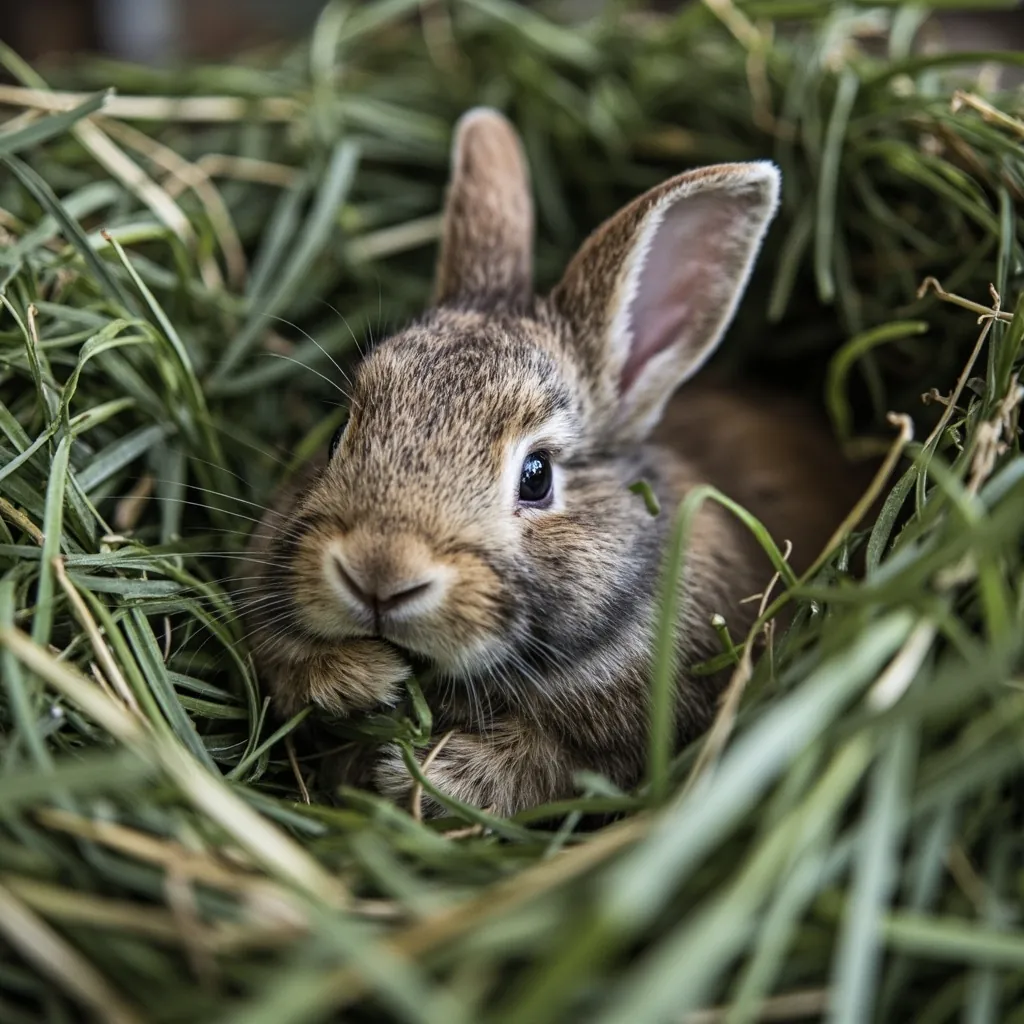
If you have a rabbit, you have probably heard that hay should make up the bulk of their diet. But how much is enough? And why does it matter so much? Let us break it down.
⚠️ Medical information: This article is for general educational purposes and is not a substitute for professional veterinary care. Always consult a rabbit-savvy veterinarian for health concerns. See our full disclaimer.
The Unlimited Hay Rule
The simple answer for adult rabbits is this: unlimited hay. Your rabbit should have access to fresh hay at all times, 24 hours a day, 7 days a week. There is no risk of overfeeding hay to a healthy adult rabbit. It should be available in their enclosure at all times so they can graze throughout the day and night.
Quantity by Rabbit Size
While hay should be unlimited, here is a general guide for how much to offer:
- Small rabbits (under 5 pounds): A large handful or ball of hay roughly the size of their body each day
- Medium rabbits (5 to 10 pounds): Two large handfuls or a small hay basket filled daily
- Large rabbits (over 10 pounds): A generous pile equivalent to their body size
This is just a guideline. The exact amount varies by individual rabbit, activity level, and the type of hay. The key is to ensure there is always some hay left by the next feeding time.
Why Hay Matters So Much
Dental health is one of the most important reasons. Rabbit teeth grow continuously throughout their lives. Chewing hay provides the constant grinding action needed to wear teeth down evenly. Without enough hay, teeth can overgrow and cause serious problems, pain, and infections.
Digestive health is another critical reason. A rabbit’s digestive system is designed to process fiber-rich foods. Hay provides the fiber needed to keep their gut moving properly. Insufficient hay can lead to serious issues like gastrointestinal stasis, which can be life-threatening.
When Your Rabbit’s Appetite Changes
Rabbits go through natural phases where they eat more or less than usual. Seasonal changes, stress, molting, and hormonal shifts can all affect appetite. Here is how to stay aware and respond appropriately:
- Seasonal changes: Many rabbits eat less during hot summer months and more in cooler weather. Adjust the amount you refill accordingly while still maintaining unlimited access.
- Molting: When shedding heavily, rabbits may eat less due to fur balls or simply because they feelunwell. Offer extra hay and consider brushing them more frequently during heavy sheds.
- Stress and change: Moving, new pets, loud noises, or changes in routine can suppress appetite. Keep hay fresh and accessible, and monitor closely during these times.
- Hormonal phases: Unspayed or unneutered rabbits may have stronger territorial behaviors and inconsistent eating tied to hormonal cycles. Getting them neutered typically stabilizes eating patterns.
- What to watch for: If your rabbit leaves more hay than usual for more than two days in a row, or shows other signs like reduced droppings, hunching, or lethargy — contact your vet. A sudden drop in appetite is always worth noting.
Conclusion
Hay is not just a food. It is the foundation of your rabbit’s health. Provide unlimited hay at all times, choose high-quality grass hays like timothy or orchard grass, and make sure your rabbit is eating plenty of it every day. Your rabbit’s teeth, digestion, and overall wellbeing will thank you.
Download Our Free Hay Guide
Print our Rabbit Supply Shopping List to make sure you always have the right hay on hand — plus everything else your rabbit needs.
Download List Browse All
When to Seek Professional Help
While home care can manage many situations, some circumstances require immediate professional veterinary attention. Understanding the difference between what you can handle yourself and what needs a veterinarian is one of the most important skills a rabbit owner can develop.
Contact a rabbit-savvy veterinarian immediately if:
- Your rabbit has stopped eating or drinking entirely
- You notice difficulty breathing or persistent wheezing
- There is visible injury, bleeding, or open wounds
- Your rabbit is unresponsive, severely lethargic, or unable to stand
- You suspect poisoning from a toxic plant or substance
- There has been no fecal output for more than 12 hours
Keep your veterinarian’s contact information and the number of the nearest after-hours emergency rabbit clinic posted somewhere easy to find. A rabbit emergency at 10pm is a terrible time to be searching for a phone number.
Long-Term Management and Prevention
Many rabbit health and behavior issues can be prevented or minimized with consistent daily care. A stable routine, appropriate diet, clean housing, and regular veterinary checkups form the foundation of preventive care. Monitor your rabbit daily for subtle changes — a slightly reduced appetite one day might be nothing, or it might be the first sign of a developing problem.
Keep a log of your rabbit’s normal behavior, droppings, eating patterns, and energy levels. When you know what normal looks like, you will notice deviations much faster. Early detection of problems almost always means simpler, cheaper treatment and better outcomes.
Building a Rabbit-Savvy Care Routine
The best rabbit care is routine-driven and consistent. Feed at the same times each day, clean the enclosure on a regular schedule, and provide fresh water daily. Handle your rabbit gently and consistently to build trust. Spay or neuter to prevent reproductive cancers and reduce problem behaviors. Keep your rabbit’s environment stable — rabbits thrive on predictability.
Invest in quality hay, appropriate housing, and the best veterinary care you can afford. The upfront cost of proper setup and preventive care is far less than treating a preventable illness or emergency.