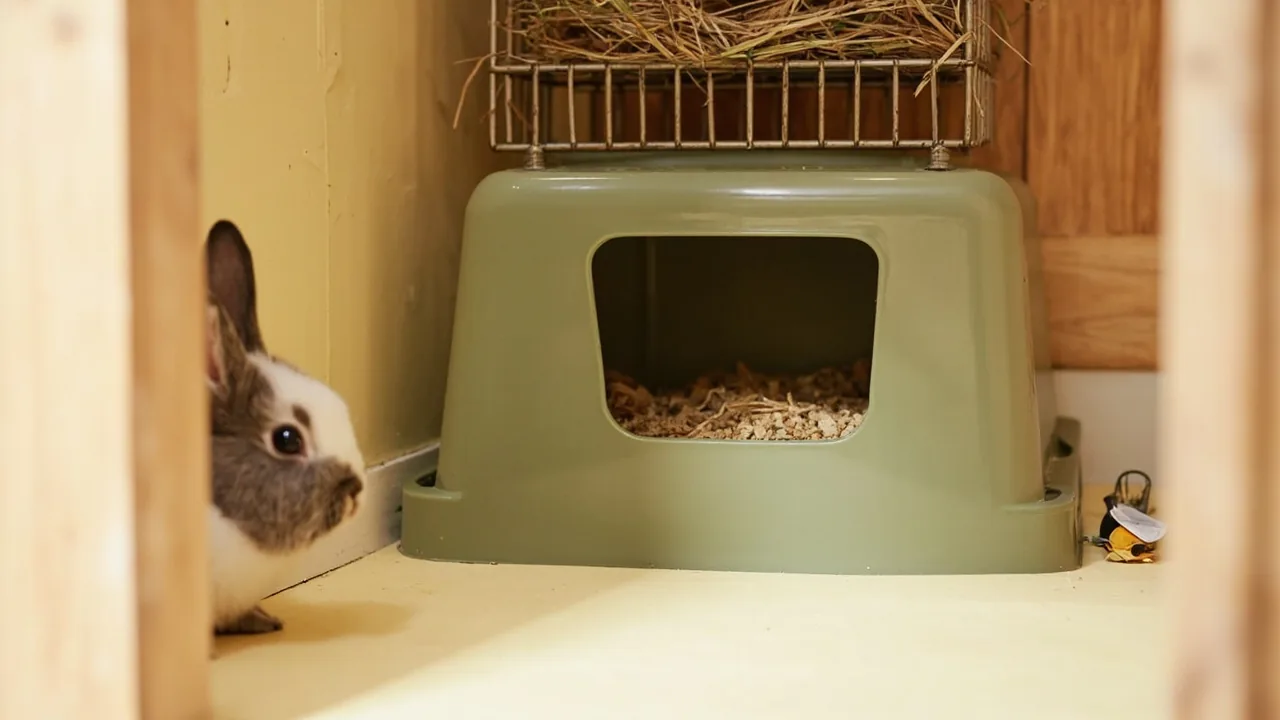
Getting the litter box right matters more than most new rabbit owners realize. A bad litter box setup is one of the top reasons rabbits have accidents outside their enclosure, and it is also one of the easiest problems to solve with the right information.
This guide covers the two main litter box styles, how to size one for your rabbit, what litter to use (and what to absolutely avoid), and how to set up a system that actually works.
1. Corner vs. Rectangular — Which Style?
Corner Litter Boxes
Corner litter boxes fit into — you guessed it — the corner of an enclosure. They are triangular and sit flush against two walls, which can be useful in small spaces or when you are working with a pre-set enclosure layout.
Best for:
- Small enclosures where space is at a premium
- Litter training young rabbits
- Rabbits who like to back into corners when they use the bathroom
Not ideal for:
- Large rabbits who need more room
- Rabbits who do not naturally back into corners
- Long-term adult rabbit setups
The main limitation of corner boxes is that they are typically too small for adult rabbits. A medium-to-large rabbit will hang their rear end over the edge of a corner box, which means mess on your floor. Once a rabbit learns to miss the box, breaking that habit is much harder than setting them up for success from the start.
Rectangular Litter Boxes
Rectangular litter boxes are the standard recommendation for most adult rabbits. They give more room to maneuver, accommodate different rabbit sizes, and are less likely to result in missed targets.
Best for:
- Adult rabbits of any size
- Free-roam setups
- Rabbits who like to dig or circle before settling in
Considerations:
- Require more floor space than corner boxes
- Some models are too shallow and allow litter to scatter
My recommendation: Unless you have a very specific space constraint, go rectangular. The extra floor space is worth it.
2. Size Recommendations by Rabbit Weight
The litter box should be large enough for your rabbit to sit comfortably, turn around, and have hay in front of them. A rabbit in a litter box should not feel cramped.
| Rabbit Weight | Minimum Box Dimensions |
|---|---|
| Under 4 lbs | 14” × 11” minimum |
| 4–7 lbs | 16” × 13” minimum |
| 7–10 lbs | 20” × 15” minimum |
| Over 10 lbs | 24” × 18” minimum |
These are minimums. Bigger is almost always better. If you have room for a larger box, use it.
For reference, I use a 20” × 15” rectangular box for my medium-sized rabbits and a 24” box for my largest rabbit. They use the whole thing, and there is less mess overall.
3. Litter Types — What Works, What Does Not
This is where I have seen the most misinformation over the years. The wrong litter can cause respiratory problems, blockages, or foot sores. Here is the honest breakdown.
Paper-Based Litter — Best Choice
Paper-based litter (such as Carefresh or Yesterday’s News) is the safest and most widely recommended option for rabbits. It is absorbent, low-dust, and digestible in small amounts.
Pros:
- Soft on rabbit feet
- Low dust — safe for respiratory systems
- Highly absorbent
- Clumps well for spot cleaning
- Digestible if a rabbit eats some while eating hay
Cons:
- More expensive than wood-based options
- Can be harder to find in stores
Wood Pellet Litter — Good Alternative
Wood pellets (such as Feline Pine wood pellets) are made from compressed sawdust. When they get wet, they break apart into sawdust. Many rabbit owners use them successfully.
Pros:
- Very absorbent
- Readily available at pet stores
- Affordable
- Biodegradable
Cons:
- Can be dusty when poured
- Some rabbits do not like the texture on their feet
- Pellets can scatter easily when rabbits dig
Hay — Not Litter, But Essential in the Box
Hay goes on top of the litter, not instead of it. Rabbits eat hay while they use the bathroom, and this is natural and healthy. More on this in the next section.
What to Absolutely Avoid
Clay litter — Clumping cat litter is extremely dangerous for rabbits. If ingested it can cause fatal blockages. Non-clumping clay litter is also inappropriate.
Corn cob litter — While sometimes marketed for small animals, corn cob can cause intestinal blockages if eaten and is prone to mold when wet.
Pine or cedar shavings — These contain aromatic oils (phenols) that can cause liver damage and respiratory problems in rabbits over time. Avoid completely.
Crystal silica litter — Found in some cat litters. Not digestible and poses a serious health risk if ingested.
4. Hay in the Litter Box — Yes or No?
Yes. Absolutely yes.
Rabbits are grazing animals. They eat constantly, including while using the bathroom. Placing hay in the litter box is not optional — it is one of the most important parts of a functional rabbit bathroom setup.
Here is why it works: a rabbit sitting in a litter box with hay in front of them will eat while they do their business. This encourages them to stay in the box longer, which means more accurate aim and fewer accidents. It also means they are eating more hay overall, which is good for their digestion and their teeth.
How much hay? Fill the box with enough hay that your rabbit can pull some out and eat it comfortably. I recommend a layer that covers the litter surface with some hay piled on top — at least a few inches deep.
What type of hay? Whatever your rabbit eats normally. Timothy hay is the standard. Orchard grass works well too. You can use a mix.
5. Cleaning Schedule That Prevents Odor
The biggest complaint I hear from new rabbit owners is about litter box smell. Here is the honest truth: a properly set up rabbit litter box should not smell bad. If it does, something in your setup needs to change.
Daily Maintenance
- Scoop solids — Remove any fecal pellets from the box daily. This takes about 30 seconds and dramatically reduces odor.
- Top up hay — Add fresh hay to replace what your rabbit has eaten.
- Check for wet spots — If the litter is soaked in one area, spot replace that litter.
Weekly Maintenance
- Full litter change — Remove all old litter and replace with fresh. Wash the box with mild soap and warm water.
- Sanitize — Once a month, sanitize the box with a 50/50 mixture of white vinegar and water. This removes mineral deposits and keeps the box clean without harsh chemicals.
Why Does My Rabbit’s Box Smell?
If you are keeping up with daily scooping and weekly changes and the box still smells, consider:
- Is the box big enough? A cramped rabbit may not use the whole box.
- Is the litter deep enough? You need sufficient litter to absorb urine.
- Are you using the right litter? Paper-based litter is more absorbent than wood pellets.
- Is your rabbit spayed or neutered? Unfixed rabbits have much stronger-smelling urine.
6. Setup Tips for Success
Put the Box Where Your Rabbit Already Goes
Rabbits are creatures of habit. If your rabbit is going in one specific corner of their enclosure or free-roam area, that is where the litter box goes. Trying to retrain a rabbit to a different spot is harder than putting the box where they are already going.
Give Them Something to Back Against
Rabbits like to have their back protected when they use the bathroom. Place the litter box against a wall or in a corner so your rabbit feels secure. An uncovered box works fine, but some rabbits prefer having at least one side blocked.
Use a Grate or Flat Bottom
Some litter boxes come with a removable grate that sits above the litter, keeping your rabbit’s feet cleaner. I have used both styles and honestly the difference is minimal. The most important thing is that the box itself has a flat bottom — avoid boxes with mesh grates that can hurt rabbit feet.
Rabbits Who Kick Litter Everywhere
If your rabbit digs in their box and scatters litter across the floor, try a box with higher sides, or place a mat under the box to catch the fallout. You can also try putting less litter in the box — a deep layer is not necessary if you are scooping daily.
Free-Roam Setups
For rabbits who are fully free-roam, I recommend at least two litter boxes. Place one in the area where your rabbit spends the most time and one in a secondary area they visit. This reduces the chances of accidents and accommodates rabbits who do not want to travel far to find a bathroom.
The Short Version
Use a rectangular litter box sized appropriately for your rabbit. Fill it with paper-based or wood pellet litter, topped with a thick layer of timothy or orchard grass hay. Scoop daily, change weekly, and sanitize monthly. Place the box where your rabbit already goes naturally.
That is the whole system.
⚠️ Medical information: This article is for general educational purposes and is not a substitute for professional veterinary care. Always consult a rabbit-savvy veterinarian for health concerns. See our full disclaimer.