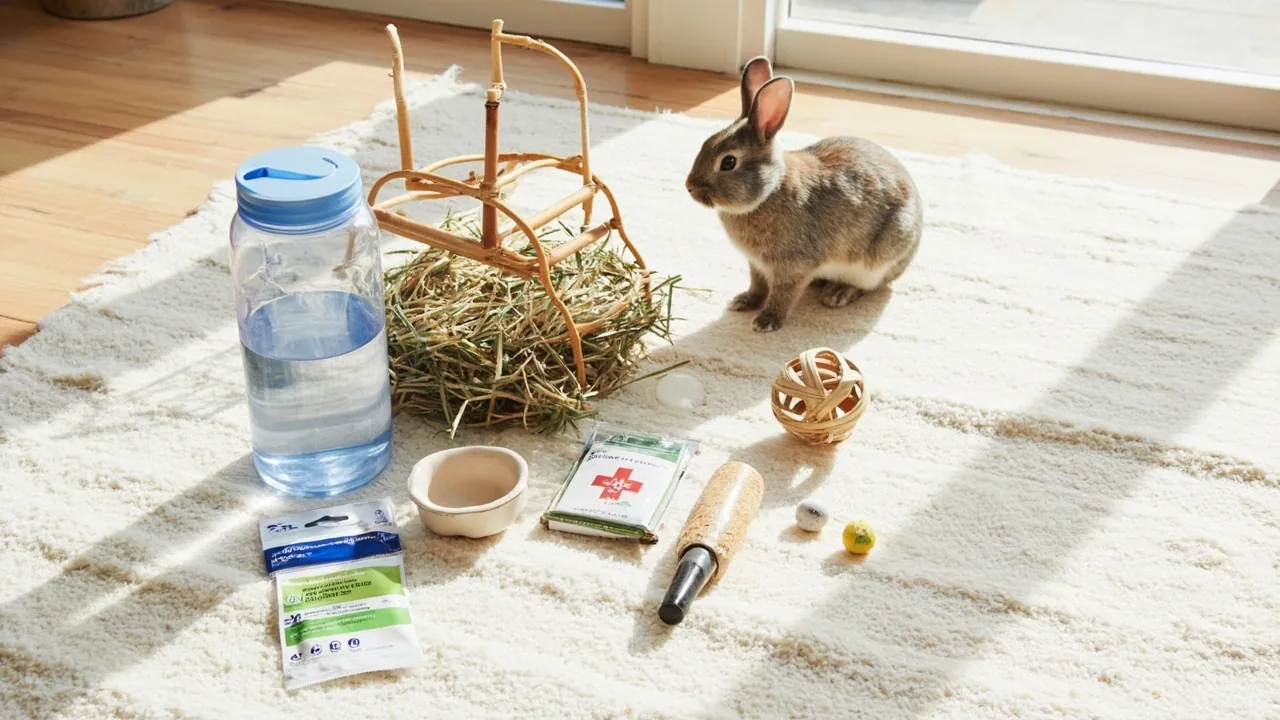
⚠️ Medical information: This article is for general educational purposes and is not a substitute for professional veterinary care. Always consult a rabbit-savvy veterinarian for health concerns. See our full disclaimer.
Thinking about getting a rabbit? Here is what you will actually need to bring your new furry friend home and keep them happy and healthy.
When I got my first rabbit, I spent way too much money on stuff I did not need and forgot the things that actually mattered. This guide is what I wish I had when I started. No fluff, no fancy marketing, just what works.
The Non-Negotiables
Before you buy anything, understand that rabbits need three things more than anything else: hay, space, and your time. Everything else is nice to have.
1. Hay (The Most Important Thing)
Your rabbit needs unlimited access to hay. Not just a little hay in a hopper. I mean a pile of hay that looks like it could feed a small horse. Timothy hay is the gold standard for adult rabbits. Orchard grass is a great alternative, especially if your rabbit is picky.
How much: You should be going through a large bag every week or two. If you are not, you are not giving enough.
What to look for: Fresh smelling, greenish color, no dust or mold. If it smells musty, toss it.
2. A Proper Enclosure
Rabbits need space to run, hop, and binky (that crazy jump they do when they are happy). A cage alone is not enough. Here is what actually works:
X-pens (Exercise Pens) are the best option for most people. They give your rabbit room to move without taking up your whole living room. The MidWest iG26 is a popular choice and usually runs around $40-50.
Dog crates work too if you convert them. Remove the plastic bottom, line with fleece, and add hay. Some people swear by large dog crates as rabbit homes.
Free roam is exactly what it sounds like. Your rabbit has run of the house. This is actually the ideal for many rabbit owners. It requires bunny-proofing but means your rabbit gets maximum exercise.
3. Litter Boxes and Safe Litter
Rabbits are naturally clean animals. They pick a corner to do their business and stick to it. Use this to your advantage with a good litter box setup.
What works: Metal cat litter boxes (the shallow kind), paper-based litter like Yesterday’s News or Carefresh, and hay piled on top (rabbits eat while they poop, which sounds weird but is completely normal).
What does not work: Clumping cat litter, cedar shavings, pine shavings. These can cause serious health problems.
Feeding Supplies
Hay Feeder
You need somewhere to put all that hay. Hay racks mount on the side of enclosures and keep the hay off the floor. Some people use shoe organizers or canvas bags. Find what works for your setup.
Water Bowl
Forget the little water bottles. Rabbits drink more from a heavy ceramic bowl because they can lap water naturally. Get something heavy enough your rabbit cannot flip it. A small dog bowl works great.
Pellets (In Moderation)
Pellets are supplements, not the main event. Adult rabbits need about 1/4 cup per day max. Look for plain pellets without seeds, dried fruit, or colored bits. Oxbow Adult Rabbit Pellets are consistently recommended by rabbit rescues and vets.
Grooming Supplies
Brushes
Depending on your rabbit’s coat, you need different tools. Slicker brushes work well for most rabbits. For long-haired breeds like Angoras or Lionheads, you need a greyhound comb to prevent mats.
Nail Clippers
Regular nail trims are essential. Small pet nail clippers or even human nail clippers work fine. Get styptic powder too, just in case you cut too close (it stops the bleeding fast).
Toys and Enrichment
Rabbits get bored. Bored rabbits destruct things, like your baseboards or phone charger cords. Give them alternatives.
Chew Toys
Rabbit teeth never stop growing. They need to chew to keep their teeth worn down. Apple wood sticks, willow balls, and untreated wicker baskets are all popular. Cardboard boxes and paper bags are free and equally loved.
Tunnel and Hiding Spots
Rabbits are prey animals. They feel safe with somewhere to hide. Tunnels, wooden houses, and even cardboard boxes with holes cut in them give your rabbit a place to feel secure.
Rabbit-Proofing Supplies
Unless you free-roam your rabbit, you need to block off areas they should not access. Cord covers and metal mesh (like hardware cloth) are essential for this. Vinyl tile mats protect carpets from digging rabbits.
The Emergency Kit
Hopefully you never need it, but every rabbit owner should have:
- Styptic powder (for nail bleeding)
- Syringe (for critical care feeding)
- Baby gas drops (simethicone) for bloating
- Emergency hay (in case you run out)
- Your vet is phone number saved
What You Can Skip
Save your money. You probably do not need:
- Fancy rabbit cages with tubes and levels (hard to clean, rabbits prefer floor space)
- Harness and leash (most rabbits hate this, and it is not safe anyway)
- Rabbit shoes or clothing (cute but unnecessary)
- Commercial treats with added sugar (a piece of banana goes further)
- Multiple water bottles (one good bowl is better)
Final Thoughts
The best thing you can give your rabbit is not a product. It is your time and attention. Rabbits are social animals. They need interaction, enrichment, and love.
Start with the basics: hay, space, a good litter setup, and time with your rabbit. Add the rest as you learn what your specific rabbit likes and needs.
Continue Reading
- Choosing the Right Rabbit Breed
- How to Litter Train Your Rabbit
- How to Rabbit-Proof Your Home
- Find a Rabbit to Adopt or Buy
Download Our Free Rabbit Care Guide
Get our comprehensive ebook covering everything you need to know for your first 30 days with a rabbit.
← Back to Articles
Everything You Need for Your New Rabbit
Download our free Rabbit Care Guide ebook covering the first 30 days with your rabbit.
Get the Free Guide Browse All Printables
When to Seek Professional Help
While home care can manage many situations, some circumstances require immediate professional veterinary attention. Understanding the difference between what you can handle yourself and what needs a veterinarian is one of the most important skills a rabbit owner can develop.
Contact a rabbit-savvy veterinarian immediately if:
- Your rabbit has stopped eating or drinking entirely
- You notice difficulty breathing or persistent wheezing
- There is visible injury, bleeding, or open wounds
- Your rabbit is unresponsive, severely lethargic, or unable to stand
- You suspect poisoning from a toxic plant or substance
- There has been no fecal output for more than 12 hours
Keep your veterinarian’s contact information and the number of the nearest after-hours emergency rabbit clinic posted somewhere easy to find. A rabbit emergency at 10pm is a terrible time to be searching for a phone number.
Long-Term Management and Prevention
Many rabbit health and behavior issues can be prevented or minimized with consistent daily care. A stable routine, appropriate diet, clean housing, and regular veterinary checkups form the foundation of preventive care. Monitor your rabbit daily for subtle changes — a slightly reduced appetite one day might be nothing, or it might be the first sign of a developing problem.
Keep a log of your rabbit’s normal behavior, droppings, eating patterns, and energy levels. When you know what normal looks like, you will notice deviations much faster. Early detection of problems almost always means simpler, cheaper treatment and better outcomes.
Building a Rabbit-Savvy Care Routine
The best rabbit care is routine-driven and consistent. Feed at the same times each day, clean the enclosure on a regular schedule, and provide fresh water daily. Handle your rabbit gently and consistently to build trust. Spay or neuter to prevent reproductive cancers and reduce problem behaviors. Keep your rabbit’s environment stable — rabbits thrive on predictability.
Invest in quality hay, appropriate housing, and the best veterinary care you can afford. The upfront cost of proper setup and preventive care is far less than treating a preventable illness or emergency.