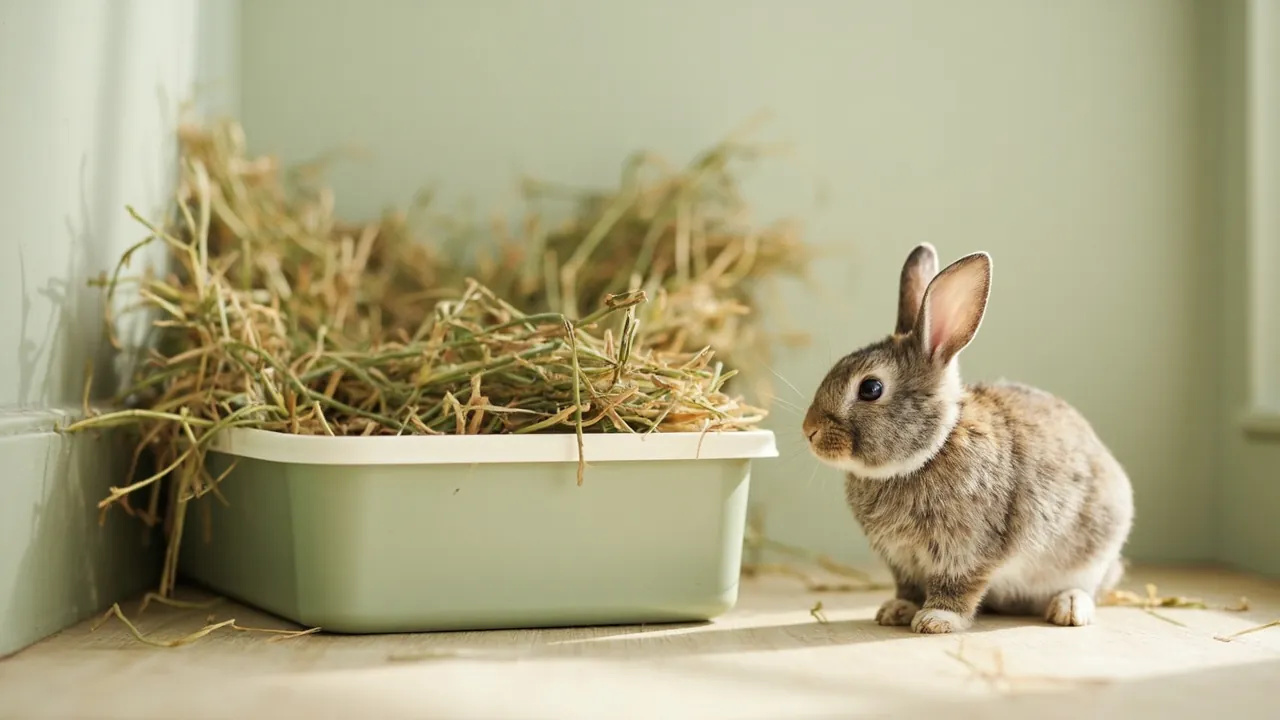
Your rabbit was doing so well. Fully trained, using the box, life was good. Then one day — or more likely, gradually — the accidents started. A few droppings outside the box. Then a puddle. Then more. Now you are wondering what went wrong.
Something did go wrong. Rabbits do not have accidents out of spite — there is always a reason. Here is how to figure out what it is and how to fix it.
The First Rule
Litter training regression has a cause. Your job is not to punish — it is to investigate. Rabbits do not revenge-poop. There is always a reason.
Why Litter Training Sometimes Fails
Litter training regression in rabbits almost always comes down to one of four categories: a medical issue, a change in environment, a shift in social dynamics, or a hormonal surge. Working through each of these systematically will help you find the answer faster.
Medical Issues — Rule These Out First
Before you assume this is a behavioral problem, watch for signs that something may be physically wrong. A rabbit in pain or discomfort will often stop using their litter box consistently, even if the underlying issue seems unrelated.
Urinary tract infections, bladder stones, arthritis in the spine or hips, and dental problems can all cause a rabbit to associate the litter box with discomfort. If your rabbit was fully trained and suddenly is not, a vet visit is warranted — especially if you notice any change in urine color, droppings that are smaller or irregular, or a reluctance to posture normally when using the box.
Arthritis is an underdiagnosed cause of regression in middle-aged and senior rabbits. A rabbit whose hips or spine hurt may start going beside the box rather than in it, because climbing in and out is painful. This is not behavioral — it is a mobility issue that your vet can help manage.
Hormonal Surges — The Most Common Culprit
If your rabbit is between four months and eighteen months old, hormones are the most likely explanation. This is the rabbit equivalent of adolescence, and it is chaotic. A previously perfectly trained rabbit may suddenly start spraying urine, leaving droppings everywhere, or abandoning the box entirely as their hormones drive territorial behavior.
The fix for hormonal regression is straightforward: get your rabbit spayed or neutered. Wait three to four weeks after surgery for the hormones to fully clear the system before expecting the behavior to stabilize. If you adopted an adult rabbit who was never neutered, the same applies — the behavior often improves dramatically once the hormones are addressed.
Environmental Changes
Rabbits are creatures of routine. Moving their enclosure, changing the type of litter in the box, relocating the box to a different corner, introducing a new pet, moving to a new home, or even rearranging furniture in their free-roam area can all cause regression.
If a change happened within a week or two of the regression starting, that is almost certainly the cause. The solution is to restore as much consistency as possible: put the box back in its original location, keep the same litter, and give your rabbit a few days to adjust before expecting normal behavior to resume.
Social Dynamics — A New Rabbit or a New Person
Introducing a new rabbit, even during slow bonding sessions, can disrupt an established rabbit’s litter habits. The resident rabbit may become anxious, start marking more aggressively, or redirect their elimination to assert territory. Even a new person in the household — a new roommate, a baby, a visitor who stays for an extended time — can cause a sensitive rabbit to change their habits.
If you have introduced a new rabbit, keep their spaces separate and maintain the original rabbit’s routine as much as possible while the bonding process unfolds. The litter habits of both rabbits should stabilize once the hierarchy is established.
How to Fix It — Step by Step
Once you have ruled out a medical cause, work through these steps in order:
- Deep clean the area — use an enzymatic cleaner on any spots where accidents happened. Ordinary household cleaners do not break down the proteins in rabbit urine the way enzymes do, and rabbits will re-mark areas that still smell like their territory.
- Reduce the area — temporarily confine your rabbit to one room or a smaller enclosure. This resets their sense of what the “territory” is and makes the litter box more prominent.
- Observe without intervening — watch where your rabbit naturally gravitates to eliminate. Rabbits have a preference for corners and edges. Moving the box to where they already go is easier than trying to convince them to go where you want.
- Keep the litter consistent — if you changed the litter type recently, switch back. Rabbits can be particular about the texture under their feet.
- Reinforce success — when your rabbit uses the box correctly, do not make a big fuss. A quiet “good” and a small treat is enough. Clean the box out regularly; rabbits will avoid a dirty box.
When to Worry — and When Not To
A single accident after a stressful event — a vet visit, a loud construction noise, a house party — is not a regression. It is a normal stress response. Give your rabbit a day or two to settle and the habit should resume.
What you are watching for is a pattern — consistent accidents over several days, in new locations, or combined with other behavioral changes. Those patterns are worth investigating more carefully.
Ready to Dive Deeper?
Print our free Rabbit Supply Shopping List to make sure you have everything you need for your rabbit.
Download the Shopping List Browse All Printables