⚠️ Medical information: This article is for general educational purposes and is not a substitute for professional veterinary care. Always consult a rabbit-savvy veterinarian for health concerns. See our full disclaimer.
Caring for a Substantial Rabbit
The New Zealand rabbit is a large breed — 10 to 12 pounds at maturity — and that size means you'll be doing everything in bigger quantities. More hay, more greens, more space, more handling care. The food bills will be higher. The enclosure will take up more room. But if you've prepared properly, the rewards are substantial as well: a calm, steady companion with genuine presence.
This guide covers everything you need to keep your New Zealand healthy, content, and well-cared for.
Grooming: Manageable Thanks to the Coat
One advantage of the New Zealand breed is its easy-care coat. The short to medium-length fur has a natural flyback quality — it returns to its position when stroked and doesn't mat easily. This makes grooming significantly less demanding than for Angora breeds.
Brushing Requirements
Plan to brush your New Zealand at least once per week under normal conditions. During shedding seasons (spring and fall), increase to two to three times per week. Each session should take 15-20 minutes, working through the entire coat systematically.
Use a slicker brush or soft-bristled brush to remove loose fur and debris. Work in the direction of hair growth, covering the body, sides, and hindquarters. Pay attention to the area around the tail where fur loosens first during sheds.
White New Zealands may show more loose fur against their coat, making grooming sessions more visibly productive. But all New Zealands shed substantially and benefit from regular brushing.
Nails and Ears
Trim your New Zealand's nails every 4-6 weeks. Use large animal nail clippers — smaller clippers designed for small pets may not be adequate for a 10+ pound rabbit's substantial nails. Check ears periodically for wax or debris and clean with a damp cotton ball if needed.
Bathing
Most New Zealands don't need regular baths. Spot-clean with a damp cloth or unscented baby wipes as needed. If a full bath becomes necessary, use lukewarm water and a mild rabbit-safe shampoo. Never submerge a rabbit, and always dry thoroughly afterward to prevent chilling.
Diet: Bigger Appetites, Same Foundation
New Zealand rabbits have the same basic dietary needs as all rabbits — unlimited grass hay, fresh greens, limited pellets, and constant water. But because of their larger size, they consume substantially more of everything.
Hay: The Non-Negotiable Foundation
Timothy hay should be available at all times. An adult New Zealand (10-12 pounds) will consume a generous amount of hay daily — roughly one ounce per pound of body weight, meaning potentially a full ounce or more per day. This translates to a large ball of hay the size of your rabbit's body, consumed daily.
Unlimited hay is essential for digestive health and dental wear. Rabbit teeth grow continuously (about 2-3mm per week), and the grinding action of eating hay is the primary mechanism for keeping teeth properly worn.
Timothy hay is the standard, but orchard grass, meadow hay, and oat hay can supplement or alternate. Some owners rotate hays to provide variety and ensure different nutrient profiles.
Fresh Greens
Feed two to three cups of fresh leafy greens daily per New Zealand. Because of their larger size, they can typically handle more generous servings than smaller breeds. Safe options include:
- Romaine and leaf lettuces
- cilantro and parsley
- bok choy and Napa cabbage
- carrot tops and beet greens
- spring mix and arugula
- basil and mint
Introduce new greens gradually to avoid digestive upset. Watch for loose stool as a sign that a particular green doesn't agree with your rabbit.
Pellets
Quality timothy-based pellets can be fed at one-half to three-quarters cup daily for adult New Zealands. Choose pellets without seeds, nuts, dried fruit, or colorful bits — these are unnecessary and can contribute to obesity and digestive problems.
Young rabbits, pregnant rabbits, and nursing mothers have higher nutritional needs and may require more pellets or specially formulated feeds.
Water
Ensure constant access to fresh, clean water. A single water bottle may not provide sufficient hydration for a large New Zealand — many owners use both a bottle and a heavy ceramic bowl. Change water daily and clean containers regularly.
Housing: More Space Required
New Zealand rabbits need significantly more space than smaller breeds. A cramped enclosure is not only uncomfortable but can lead to pressure sores, muscle atrophy, and behavioral problems.
Space Requirements
Plan for an enclosure at least 48 inches long — larger is better for an adult New Zealand. Many owners use large exercise pens (4 feet by 6 feet or larger) configured into spacious setups. The enclosure must have solid-bottom flooring — wire floors cause serious foot injuries in any rabbit but are especially problematic for heavy breeds.
Appropriate bedding includes paper-based products, aspen shavings, fleece blankets, or hay. Avoid cedar and pine shavings, which contain aromatic oils that can cause respiratory and liver problems. Spot-clean daily and do full bedding changes weekly.
Litter Training
New Zealands can be litter trained with patience. Place a litter box in the corner where your rabbit naturally eliminates. Use hay in the box — rabbits often eat and poop simultaneously, and hay in the litter box encourages correct behavior.
Handling: Support is Critical
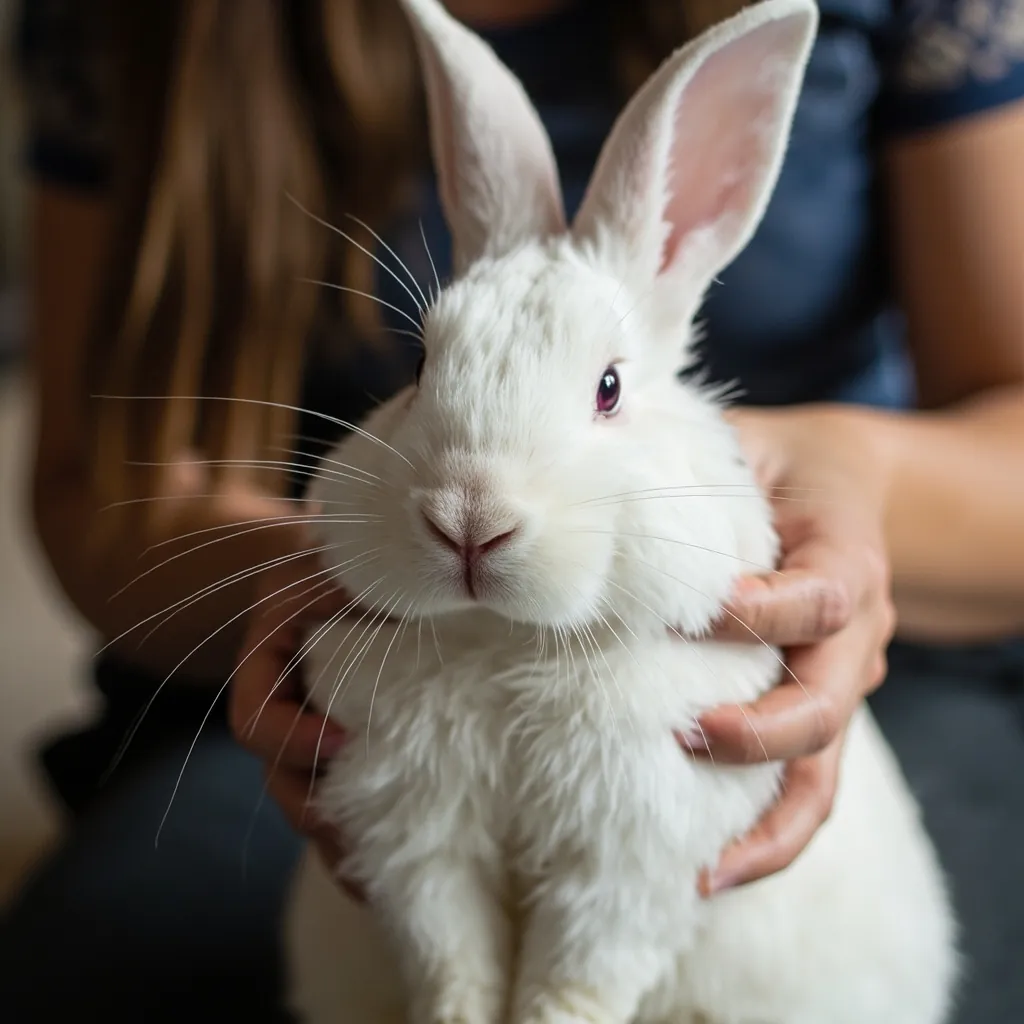
At 10-12 pounds, New Zealands require proper handling support. Never lift by the scruff or just the front legs — this can cause serious injury. Instead:
- Place one hand under the chest, behind the front legs
- Place the other hand under the hindquarters to support the full weight
- Lift close to your body to provide security
- Never let the rabbit's body dangle — always support the hindquarters
Children should always be supervised when handling a New Zealand, and smaller children may need assistance from an adult due to the rabbit's weight.
Exercise: Daily Requirements
New Zealand rabbits need daily exercise outside their enclosure — plan for at least 3-4 hours in a safe, bunny-proofed space. While New Zealands are calmer than some breeds, they still need room to stretch out, move around, and engage in natural behaviors.
Bunny-Proofing
Before giving your New Zealand free roam, bunny-proof thoroughly:
- Cover all electrical cords securely
- Remove or protect baseboards and furniture legs
- Keep books, papers, and other chewables out of reach
- Block access to under furniture where the rabbit could get stuck
- Ensure no toxic plants or substances are accessible
New Zealands may not be as relentlessly curious as some breeds, but they still need a safe environment for exercise.
Enrichment Ideas
Keep your New Zealand entertained with:
- Cardboard castles, tunnels, and boxes
- Willow and apple wood chew sticks
- Hay stuffed into paper towel rolls or paper bags
- Wooden puzzle feeders
- Rotating toys to prevent boredom
Some New Zealands enjoy having a platform or box to sit on so they can survey their territory from a higher vantage point.
Bonding With Your New Zealand
New Zealands' calm temperaments make them relatively approachable for bonding, though every rabbit is an individual.
Building Trust
Start by sitting on the floor near your New Zealand's enclosure. Let them notice you and approach at their own pace. Offer herbs or small treats through the cage bars. Let your rabbit set the pace — don't chase, grab, or corner them.
Once your New Zealand seems comfortable with you, open the enclosure and let them explore you on their own terms. Be patient — building trust takes weeks, not days.
Patience Rewarded
Many New Zealand owners describe their rabbits as genuinely affectionate — leaning into pets, asking for attention, following them around the room. This calm, steady companionship is one of the breed's greatest rewards.
Temperature Sensitivity
New Zealands have dense coats and are sensitive to heat. Keep them in climate-controlled spaces where temperatures stay below 75°F (24°C). In warm months, ensure air conditioning and avoid direct sunlight.
Signs of overheating include panting, lethargy, and very warm ears. If you see these signs, move your New Zealand to a cool area immediately and seek veterinary care if symptoms persist.
Final Thoughts
New Zealand rabbit care is a substantial commitment — in size if not in complexity. The breed's easy-care coat and calm temperament make it accessible to owners willing to accommodate the larger space and food requirements.
If you want a rabbit with genuine presence — calm, steady, and substantial — the New Zealand rewards the extra effort. Their larger size means you feel their weight when you hold them, their body warmth when they lean against you, and their calm assurance as they move through your space. It's a different experience than a small breed — and for many owners, a deeply satisfying one.
Socialization and Bonding
Building a trusting relationship with your New Zealand takes time and patience, but the reward is a rabbit who actively seeks your company. Start by sitting quietly near your rabbit's enclosure without making direct eye contact — rabbits find sustained eye contact threatening. Let your rabbit come to you.
Offer treats from your hand to create positive associations. Once your rabbit is comfortable with hand-feeding, try gentle stroking behind the ears and on the forehead. Avoid picking up your rabbit unless necessary — most rabbits find being lifted stressful, and improper lifting can cause injury to both rabbit and owner.
If you have other pets, introduce them gradually and always under supervision. Dogs and cats should be taught that the rabbit is not prey. Never leave a New Zealand unsupervised with other animals, no matter how well you think they get along.
Enrichment and Mental Stimulation
New Zealands are intelligent animals who need mental stimulation to stay happy and healthy. Boredom can lead to destructive behaviors, over-grooming, and even depression. Rotate toys regularly to keep things interesting — a toy that has been in the enclosure for weeks will generate less interest than one that appears fresh.
Safe enrichment options include:
- Untreated willow balls and tunnels
- Cardboard boxes filled with hay
- Apple wood or willow chew sticks for dental health
- Platforms and hiding spots at different heights
- Paper bags filled with herbs for foraging
- Puzzle feeders that make rabbits work for treats
Digging boxes — a shallow tray filled with shredded paper or hay — satisfy a natural digging instinct without destroying your home. Rotate enrichment items every few days to maintain novelty.
Seasonal Care Considerations
New Zealands are sensitive to temperature extremes. Keep their environment between 60-70°F (15-21°C) as much as possible. In hot weather, provide ceramic tiles to lie on, frozen water bottles wrapped in a towel, and ensure ventilation without drafts. In cold weather, provide extra bedding and ensure the enclosure is draft-free — rabbits are more tolerant of cold than heat, but frostbite and hypothermia are real risks.
Grooming frequency may increase during spring and fall shedding seasons. Monitor coat condition more closely during these periods and brush more often to prevent hairballs.
Signs Your New Zealand Is Thriving
A healthy, happy New Zealand is curious and alert when awake, interested in their environment, and eager to interact with you. Their coat is glossy and clean, their eyes are bright, and they are eating, drinking, and producing normal droppings consistently.
Behavioral signs of a content rabbit include binkying (joyful leaps in the air), flopping onto their side, and relaxed grooming. A New Zealand who regularly comes to the front of their enclosure when you approach is showing positive association and trust.
If you notice any sudden changes — hiding more than usual, refusing food, producing fewer droppings, or appearing lethargic — contact a rabbit-savvy veterinarian promptly. Rabbits hide illness well, and any visible sign of distress usually means the problem has been developing for some time.